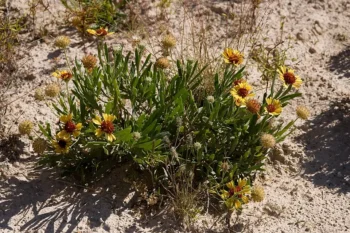
Onion Blanketflower: A Southwestern Native Worth Growing
Meet the onion blanketflower (Gaillardia multiceps), a charming little native perennial that’s been quietly brightening up the American Southwest for ages. Don’t let the onion part of its name fool you – this delightful wildflower is all about cheerful daisy-like blooms, not pungent bulbs!
What Makes Onion Blanketflower Special?
This hardy perennial forb brings a splash of sunshine to any garden with its bright yellow petals that often sport vibrant red or orange centers. As a native plant species, onion blanketflower has evolved perfectly for life in the southwestern United States, making it an excellent choice for gardeners looking to create sustainable, water-wise landscapes.
Where Does It Call Home?
Onion blanketflower is naturally found across three southwestern states: Arizona, New Mexico, and Texas. This native range tells us everything we need to know about its preferences – it loves heat, sun, and doesn’t mind if you forget to water it now and then.
- Species observed
- No observations
A Note About Conservation
Before you rush out to plant onion blanketflower, there’s something important to know. This species currently has an undefined conservation status, which means we’re not entirely sure about its population numbers in the wild. If you decide to grow this beauty, please make sure you source your plants or seeds from reputable nurseries that practice responsible propagation methods.
Why Your Garden (and Local Wildlife) Will Love It
Onion blanketflower is like a busy diner for pollinators – bees and butterflies can’t resist stopping by for a nectar meal. The flowers bloom from spring through fall, providing a reliable food source throughout most of the growing season. Plus, as a native plant, it supports local ecosystems in ways that non-native plants simply can’t match.
In your landscape design, this versatile plant works beautifully as:
- Ground cover in xeriscaped areas
- A naturalized element in wildflower meadows
- Border plantings in native plant gardens
- Low-maintenance filler in rock gardens
Perfect Growing Conditions
If you live in USDA hardiness zones 7 through 10, you’re in luck! Onion blanketflower thrives in these warmer regions and asks for very little in return. Here’s what makes this plant happiest:
- Sunlight: Full sun is essential – at least 6-8 hours daily
- Soil: Well-draining soil is crucial; it actually prefers poor to moderately fertile conditions
- Water: Drought tolerant once established, so resist the urge to overwater
- Climate: Loves heat and handles dry conditions like a champ
Planting and Care Made Simple
One of the best things about onion blanketflower is how low-maintenance it is once you get it established. Here are some tips for success:
- Plant in spring after the last frost date
- Space plants about 12-18 inches apart
- Water regularly the first year to help establish strong roots
- After year one, water only during extended dry periods
- Deadhead spent blooms to encourage more flowers
- Allow some flowers to go to seed if you want the plant to naturalize
The best part? This little trooper rarely needs fertilizer and actually performs better in lean soils than in rich, heavily amended ones.
Is Onion Blanketflower Right for Your Garden?
If you’re gardening in the Southwest and want to create a water-wise, pollinator-friendly landscape that celebrates your region’s natural heritage, onion blanketflower could be a perfect addition. It’s especially ideal for gardeners who love the plant it and forget it approach to landscaping.
However, remember that responsible sourcing is key due to its uncertain conservation status. By choosing ethically propagated plants, you’ll be supporting both your local ecosystem and conservation efforts.
With its cheerful blooms, easy-care nature, and important role in supporting native wildlife, onion blanketflower proves that sometimes the best garden additions are the ones that have been thriving in your area all along!