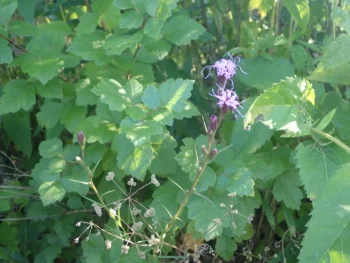
Ontario Blazing Star: A Striking Native Wildflower for Your Garden
If you’re looking for a native wildflower that adds dramatic height and attracts butterflies by the dozen, Ontario blazing star (Liatris cylindracea) might just be your new garden favorite. This perennial forb brings a unique charm to any landscape with its distinctive purple-pink flower spikes that bloom in an unusual top-to-bottom pattern – quite the conversation starter!
What Makes Ontario Blazing Star Special
Ontario blazing star is a true North American native, naturally occurring across Canada and much of the lower 48 states. You’ll find this hardy perennial growing wild from Ontario down through the Great Lakes region and extending into states like Alabama, Arkansas, Illinois, Indiana, Iowa, Kansas, Kentucky, Michigan, Minnesota, Missouri, New York, Ohio, Tennessee, and Wisconsin.
- Species observed
- No observations
What sets this blazing star apart from its cousins is its slender, cylindrical flower heads that create elegant vertical lines in the garden. The purple-pink blooms appear in late summer, just when many other native plants are starting to fade, providing a welcome burst of color when you need it most.
Why Your Garden (and Local Wildlife) Will Love It
Ontario blazing star is like a magnet for beneficial insects. Butterflies, bees, and other pollinators flock to its nectar-rich blooms, making it an excellent choice for anyone wanting to support local wildlife. The flowers also provide seeds for birds later in the season, extending its wildlife value well into fall.
From a design perspective, this plant shines as a vertical accent in prairie gardens, wildflower meadows, and naturalized areas. Its tall, slender form works beautifully in cottage garden settings too, where it can weave among other perennials without overwhelming them.
Growing Ontario Blazing Star Successfully
The good news is that Ontario blazing star is refreshingly low-maintenance once established. Here’s what you need to know:
Growing Conditions
- Sunlight: Full sun for best flowering
- Soil: Well-drained soils; adaptable to various soil types
- Water: Drought tolerant once established
- Hardiness: Thrives in USDA zones 3-8
Planting and Care Tips
Plant Ontario blazing star in spring or fall when temperatures are moderate. Space plants about 12-18 inches apart to allow for their natural spread. While they’re getting established (usually the first year), provide regular water during dry spells. After that, they’re remarkably drought tolerant.
Maintenance is minimal – simply cut back the spent stems in late winter or early spring. Many gardeners choose to leave the seed heads standing through winter for the birds, which is both wildlife-friendly and adds interesting texture to the winter garden.
Important Conservation Note
While Ontario blazing star isn’t considered invasive or problematic, it does have a rarity status of S2 (imperiled) in Alabama, meaning it’s quite uncommon there. If you’re gardening in Alabama or other areas where this plant might be less common, make sure to source your plants or seeds from reputable native plant nurseries that use responsibly collected material. Never collect plants from the wild.
Is Ontario Blazing Star Right for Your Garden?
This native beauty is an excellent choice if you want to:
- Support local pollinators and birds
- Add vertical interest to prairie or naturalized plantings
- Grow low-maintenance perennials
- Create habitat for beneficial insects
- Enjoy late-summer blooms when many plants are winding down
Ontario blazing star proves that native doesn’t mean boring. With its striking flowers, wildlife benefits, and easy-care nature, it’s a wonderful addition to gardens that celebrate the beauty of North American flora. Just remember to source it responsibly, especially in areas where it’s less common, and you’ll have a stunning perennial that gives back to the ecosystem while beautifying your landscape.