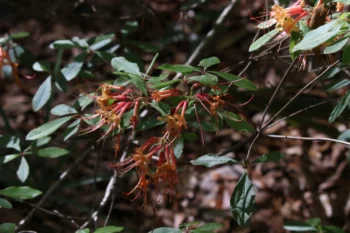
Orange Azalea: A Fragrant Native Gem for Your Garden
If you’re looking to add a splash of vibrant color and sweet fragrance to your garden while supporting local wildlife, the orange azalea (Rhododendron austrinum) might just be your new favorite native shrub. This southeastern beauty offers something special that many garden plants can’t: it’s perfectly adapted to local conditions and provides genuine ecological benefits.
What Makes Orange Azalea Special?
Orange azalea goes by the botanical name Rhododendron austrinum, and you might occasionally see it listed under its old scientific name, Azalea austrina. This native perennial shrub typically grows 4-16 feet tall with multiple stems emerging from the ground, creating a naturally graceful form that fits beautifully into informal landscapes.
What really sets this plant apart is its spectacular spring flower show. Before the leaves even think about appearing, clusters of bright orange to yellow-orange tubular flowers burst forth, filling the air with their sweet, honey-like fragrance. The prominent stamens add an extra touch of elegance that makes this shrub a real showstopper.
Where Orange Azalea Calls Home
This lovely native is naturally found across the southeastern United States, specifically in Alabama, Florida, Georgia, and Mississippi. It thrives in the coastal plains and river valleys of these states, where it has adapted to the local climate and soil conditions over thousands of years.
- Species observed
- No observations
Why Your Garden (and Local Wildlife) Will Love It
Orange azalea isn’t just a pretty face – it’s a hardworking member of the local ecosystem. The tubular flowers are perfectly designed to attract butterflies, moths, and hummingbirds, providing them with nectar when many other plants are still dormant. According to wildlife studies, this shrub contributes to the diets of various animals, with large mammals getting 5-10% of their nutrition from it, and birds receiving 2-5% of their dietary needs.
The plant’s ability to grow in both wetland and non-wetland areas (it has a facultative wetland status) makes it incredibly versatile for different garden situations. Whether you have a slightly soggy spot or well-drained soil, orange azalea can adapt.
Perfect Garden Situations
Orange azalea shines in several garden settings:
- Woodland gardens where it can naturalize under taller trees
- Native plant landscapes that celebrate local flora
- Informal, cottage-style gardens
- Areas with partial shade and consistent moisture
- Stream or pond edges where its wetland tolerance is an asset
Growing Orange Azalea Successfully
This native beauty is surprisingly easy to grow once you understand its preferences. Orange azalea thrives in USDA hardiness zones 7-9, making it perfect for much of the southeastern United States.
Light and Location: Choose a spot with partial shade – morning sun with afternoon protection works wonderfully. Avoid areas with harsh, drying winds.
Soil Needs: Like most azaleas, orange azalea prefers acidic, well-draining soil that stays consistently moist but never waterlogged. Adding organic matter like leaf mold or compost will keep your plant happy.
Planting Tips: Spring and fall are the best planting times. Dig a hole as deep as the root ball but twice as wide, and don’t plant too deeply – azaleas have shallow root systems that need to breathe.
Care and Maintenance: Once established, orange azalea is fairly low-maintenance. Apply a 2-3 inch layer of mulch to retain moisture and suppress weeds, but keep it away from the base of the plant. Minimal pruning is needed – just remove any dead or damaged branches after flowering.
An Important Conservation Note
Here’s something every responsible gardener should know: orange azalea has a global conservation status of S3, meaning it’s considered vulnerable in the wild. In Alabama, it’s rated S2S3, indicating it’s quite rare in that state. This makes it even more special in your garden, but it also means you should only purchase plants from reputable nurseries that grow them from seed or cuttings rather than collecting from wild populations.
By choosing nursery-grown orange azalea, you’re not only getting a healthier plant that’s more likely to thrive in your garden, but you’re also helping protect wild populations of this beautiful native.
The Bottom Line
Orange azalea offers the perfect combination of stunning beauty, delightful fragrance, and ecological value. Its bright spring flowers will make you smile, its sweet scent will make you linger in the garden, and the butterflies and hummingbirds it attracts will make the whole space feel more alive. Plus, there’s something deeply satisfying about growing a plant that truly belongs in your local landscape.
If you have partial shade, reasonable soil, and a love for native plants that actually make a difference for local wildlife, orange azalea deserves a spot in your garden. Just remember to source it responsibly – this special native beauty is worth protecting for future generations to enjoy.