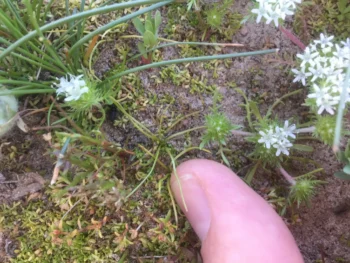
Orcutt’s Quillwort: California’s Mysterious Wetland Survivor
If you’ve ever wondered about those peculiar grass-like tufts you might spot in California’s seasonal wetlands, you may have encountered one of nature’s most ancient survivors: Orcutt’s quillwort (Isoetes orcuttii). This isn’t your typical garden plant, and that’s exactly what makes it so fascinating.
What Exactly Is Orcutt’s Quillwort?
Don’t let the name fool you – Orcutt’s quillwort isn’t actually a grass, despite its grass-like appearance. This perennial belongs to an ancient group of plants called quillworts, which are more closely related to ferns than to true grasses. Think of it as a living fossil that has been quietly thriving in California’s wetlands for millions of years.
The plant gets its common name from its distinctive quill-shaped leaves that emerge from a central base, creating small tufts that look remarkably like miniature porcupine quills poking up from the ground.
Where to Find This California Native
Orcutt’s quillwort is a true California endemic, meaning it naturally occurs nowhere else on Earth. You’ll find this specialized plant exclusively within California’s borders, where it has adapted to the state’s unique Mediterranean climate and seasonal wetland habitats.
- Species observed
- No observations
A Wetland Specialist
Here’s where things get interesting: Orcutt’s quillwort is what botanists call an obligate wetland species. This means it almost always occurs in wetlands and has evolved specifically for life in seasonally flooded areas like vernal pools. These temporary wetlands fill with winter rains and dry out completely during California’s long, dry summers – a challenging cycle that few plants can handle.
Why This Plant Matters (And Why You Probably Shouldn’t Try Growing It)
Orcutt’s quillwort carries a conservation status that should make us all take notice. With its rarity and highly specialized habitat requirements, this plant faces significant challenges in the wild. Urban development, agriculture, and changes to natural water cycles have impacted many of the vernal pools where this species naturally thrives.
For most home gardeners, attempting to cultivate Orcutt’s quillwort would be both impractical and potentially problematic:
- It requires very specific seasonal wet/dry cycles that are nearly impossible to replicate artificially
- The plant needs particular soil conditions found in natural vernal pools
- Its rarity means any collection from the wild would harm wild populations
- It doesn’t provide typical garden benefits like flowers for pollinators
How to Identify Orcutt’s Quillwort in Nature
If you’re exploring California’s natural areas and think you might have spotted this rare plant, here’s what to look for:
- Small tufts of narrow, quill-like leaves emerging from a central point
- Grows in seasonal wetlands, vernal pools, or areas that flood temporarily
- Leaves are typically 2-6 inches long and very narrow
- No visible flowers (it reproduces via spores, like ferns)
- Often found growing alongside other specialized vernal pool plants
Supporting Conservation Instead
Rather than trying to grow this challenging species in your garden, consider these ways to support Orcutt’s quillwort and similar rare natives:
- Support organizations working to protect California’s remaining vernal pools
- Choose other California native wetland plants that are more suitable for gardens
- Visit preserved vernal pool habitats to observe these plants in their natural setting
- Advocate for protection of undeveloped seasonal wetlands in your area
Orcutt’s quillwort reminds us that not every native plant belongs in our gardens – sometimes the best way to appreciate these botanical treasures is to ensure their wild habitats remain protected for future generations to discover and marvel at.