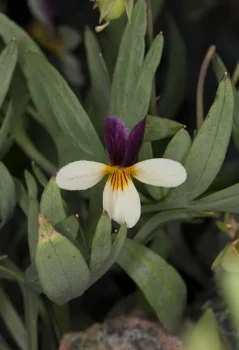
Oregon Violet: A Charming Native Wildflower for Pacific Coast Gardens
If you’re looking to add a touch of understated elegance to your shade garden, the Oregon violet (Viola hallii) might just be the perfect native wildflower you’ve been seeking. This delightful little perennial brings all the charm of a classic violet while supporting your local ecosystem in ways that non-native alternatives simply can’t match.
What Makes Oregon Violet Special?
Oregon violet is a true Pacific Coast native, naturally occurring in the mountainous and coastal regions of California and Oregon. As a perennial forb—that’s garden-speak for a soft-stemmed flowering plant that comes back year after year—this lovely violet forms low-growing colonies that create natural carpets of color in woodland settings.
Unlike woody shrubs or trees, Oregon violet stays herbaceous throughout its life, with delicate stems and heart-shaped leaves that die back in winter only to emerge fresh and green each spring. It’s the kind of plant that whispers rather than shouts, offering subtle beauty that rewards those who take time to notice.
- Species observed
- No observations
Why Choose Oregon Violet for Your Garden?
There are several compelling reasons to consider adding this native beauty to your landscape:
- Ecosystem support: As a native plant, Oregon violet has co-evolved with local wildlife, providing food and habitat that non-native plants simply can’t offer
- Low maintenance: Once established, native plants typically require less water, fertilizer, and pest control than exotic species
- Pollinator friendly: The small but charming flowers attract native bees, butterflies, and other beneficial insects
- Natural groundcover: Perfect for filling in those tricky shaded spots where grass struggles to grow
- Authentic beauty: There’s something deeply satisfying about growing plants that truly belong in your local landscape
Where Oregon Violet Thrives
This adaptable little violet has a facultative wetland status, which means it’s equally happy in moist and moderately dry conditions—though it does prefer consistent moisture when possible. You’ll find it naturally growing in woodland clearings, along stream banks, and in partially shaded mountain meadows.
Oregon violet is ideally suited for:
- Woodland gardens and forest edges
- Shade gardens under trees or large shrubs
- Native plant gardens and naturalistic landscapes
- Rain gardens and bioswales (thanks to its flexible water tolerance)
- Rock gardens in cooler, shadier spots
Growing Oregon Violet Successfully
The good news for Pacific Coast gardeners is that Oregon violet is relatively easy to grow when you give it conditions similar to its native habitat.
Ideal Growing Conditions
- Light: Partial to full shade (morning sun with afternoon shade works well)
- Soil: Moist but well-draining soil with good organic content
- Climate: Hardy in USDA zones 7-9, perfect for most of California and Oregon
- Water: Consistent moisture preferred, but can handle some drought once established
Planting and Care Tips
Getting your Oregon violet off to a good start is straightforward with these simple guidelines:
- Timing: Plant in spring or fall when temperatures are mild and rainfall is more reliable
- Spacing: Allow 6-12 inches between plants as they’ll naturally spread to form colonies
- Soil prep: Improve heavy clay or sandy soils by working in compost or leaf mold
- Watering: Keep soil consistently moist but not waterlogged, especially during the first growing season
- Mulching: Apply a thin layer of organic mulch to retain moisture and suppress weeds
- Fertilizing: Generally unnecessary—these native plants prefer lean soils and too much fertilizer can actually weaken them
A Perfect Fit for Sustainable Gardening
Oregon violet embodies everything we love about native plant gardening. It’s beautiful without being flashy, supports local wildlife, and requires minimal inputs once established. While it may not have the bold presence of some garden showstoppers, it offers something perhaps more valuable: the quiet satisfaction of growing a plant that truly belongs in your corner of the world.
Whether you’re creating a woodland sanctuary, filling challenging shaded spots, or simply wanting to support your local ecosystem, Oregon violet deserves a place in Pacific Coast gardens. Sometimes the most rewarding plants are those that feel less like guests in our gardens and more like they’ve finally come home.