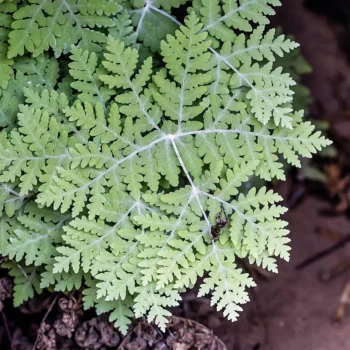
Pale Silverback Fern: California’s Shimmering Native Treasure
Meet the pale silverback fern (Pentagramma pallida), a captivating California native that’s like nature’s own glitter bomb. This charming little fern doesn’t just blend into the background – it practically sparkles with its distinctive silvery-white undersides that catch the light like tiny mirrors.
What Makes This Fern Special
The pale silverback fern is a true California original, found nowhere else in the world. This perennial beauty belongs to a group of ferns known for their powdery undersides, but Pentagramma pallida takes the cake with its particularly striking pale coating called farina. The triangular fronds may be small, but they pack a visual punch that’s hard to ignore.
You might also see this plant listed under its former scientific names, including Pityrogramma pallida or Pityrogramma triangularis var. pallida, but don’t let the name changes fool you – it’s the same shimmering wonder.
Where You’ll Find It
This fern calls California home and only California. It’s perfectly adapted to the Golden State’s unique climate and rocky terrain, thriving in the nooks and crannies of cliff faces and rocky outcrops throughout the state’s coastal and inland mountain ranges.
- Species observed
- No observations
A Word About Rarity
Here’s something important to know: the pale silverback fern has a somewhat uncertain conservation status, with experts still working to fully understand its population health. While it’s not officially listed as endangered, this uncertainty means we should treat it with extra care and respect. If you’re lucky enough to encounter this fern in the wild, admire it but don’t disturb it.
Garden Appeal and Benefits
While the pale silverback fern doesn’t offer nectar for pollinators (ferns reproduce via spores, not flowers), it brings other valuable qualities to a garden:
- Unique visual interest with its shimmering, pale undersides
- Excellent drought tolerance once established
- Perfect for rock gardens and naturalistic landscapes
- Adds authentic California native character to plantings
- Requires minimal maintenance and water
Growing Conditions
If you’re considering adding this beauty to your garden, it thrives in USDA hardiness zones 8-10 and prefers:
- Well-draining, rocky or sandy soils
- Partial shade to filtered sunlight
- Minimal water once established
- Protection from intense afternoon sun
The Responsible Approach
Given its uncertain conservation status, we strongly recommend only obtaining pale silverback fern from reputable native plant nurseries that propagate their stock responsibly. Never collect from wild populations, and always purchase from sources that can verify their plants weren’t wild-collected.
This approach ensures you can enjoy this remarkable fern while helping protect wild populations for future generations. After all, some of nature’s most beautiful treasures are worth the extra effort to source responsibly.
Perfect for the Right Garden
The pale silverback fern is ideal for gardeners who appreciate subtle beauty and want to create authentic California native landscapes. It’s particularly stunning in rock gardens, Mediterranean-style plantings, and drought-tolerant designs where its unique silvery shimmer can really shine.
Just remember: less is more with this fern. It’s adapted to lean conditions, so resist the urge to pamper it with rich soil or frequent watering. Sometimes the most beautiful plants are the ones that ask for the least but give back the most in terms of character and charm.