Palmer’s Mariposa Lily: A Rare California Native Worth Protecting
If you’re a California gardener with a passion for native plants and a soft spot for botanical rarities, Palmer’s mariposa lily might just capture your heart. This delicate perennial forb, scientifically known as Calochortus palmeri var. palmeri, is one of Southern California’s most enchanting wildflowers—and one of its most vulnerable.
A True California Original
Palmer’s mariposa lily is as Californian as it gets, calling only the Golden State home. This native beauty has evolved specifically to thrive in Southern California’s unique climate, making it a perfect ambassador for regional gardening. You might occasionally see it listed under its synonym, Calochortus paludicola Davidson, but don’t let the name confusion fool you—this is the same stunning plant.
The plant is endemic to Southern California, with its primary stronghold in San Diego County. Its limited geographic range makes every garden population precious for conservation efforts.
- Species observed
- No observations
Why This Plant Deserves Your Attention
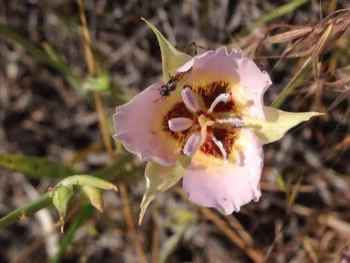
What makes Palmer’s mariposa lily so special? Picture this: elegant three-petaled flowers that seem almost too delicate for this world, blooming in pristine white to soft pink hues adorned with intricate purple markings. These cup-shaped blooms appear in spring, creating a brief but unforgettable display that perfectly embodies California’s natural beauty.
As a perennial forb, this plant returns year after year from underground bulbs, though it follows a decidedly California lifestyle—active and gorgeous in spring, then retreating underground for a long summer siesta.
A Word of Caution: Rarity Matters
Here’s where things get serious: Palmer’s mariposa lily carries a Global Conservation Status of S2T2, indicating it’s quite rare in the wild. This means that while it’s absolutely worth growing, you’ll need to source your bulbs responsibly. Never collect from wild populations, and always purchase from reputable native plant nurseries that propagate their stock ethically.
Growing this plant isn’t just about adding beauty to your garden—it’s about participating in conservation efforts and maintaining genetic diversity of this precious species.
Perfect Garden Homes
Palmer’s mariposa lily shines brightest in:
- Mediterranean-style gardens that mimic California’s natural rainfall patterns
- Rock gardens with excellent drainage
- Native plant collections and botanical displays
- Drought-tolerant landscapes
- Specialty bulb gardens
This isn’t a plant for every garden situation, but for the right spot and the right gardener, it’s absolutely magical.
Growing Conditions and Care
Success with Palmer’s mariposa lily comes down to understanding its natural lifestyle. This plant thrives in USDA hardiness zones 9-10 and demands:
- Excellent drainage: Soggy soil is the kiss of death for these bulbs
- Full sun to partial shade: Morning sun with afternoon protection works well
- Dry summer conditions: Once dormant, keep the soil dry until fall rains return
- Well-draining, sandy or rocky soil: Clay soils need serious amendment
Planting and Care Tips
Plant bulbs in fall, just as you would other California natives that follow the Mediterranean growth pattern. Place them about 3-4 inches deep in well-prepared, sandy soil. Water during the growing season (fall through spring), but once the foliage yellows and dies back in late spring or early summer, cut off irrigation entirely.
The key to long-term success is patience and restraint. Let the plant follow its natural cycle, and resist the urge to water during summer dormancy. Think of it as the plant’s well-deserved vacation time.
Supporting Local Wildlife
While Palmer’s mariposa lily may be small in stature, it punches above its weight in supporting local pollinators. Native bees and butterflies are drawn to its spring blooms, making it a valuable addition to pollinator-friendly gardens. Every flower represents not just beauty in your landscape, but food for California’s native insects.
The Bottom Line
Palmer’s mariposa lily isn’t the easiest native plant to grow, nor is it the showiest for the longest period. But for gardeners who appreciate subtle beauty, rare botanical treasures, and the satisfaction of growing something truly special, it’s absolutely worth the effort. Just remember: source responsibly, provide proper growing conditions, and respect this plant’s natural rhythms.
By growing Palmer’s mariposa lily, you’re not just adding a unique native plant to your garden—you’re becoming a steward of California’s botanical heritage. And that’s something worth celebrating.