Palmer’s Phacelia: A Hidden Gem for Desert Gardens
If you’re looking for a charming native wildflower that thrives in challenging desert conditions, Palmer’s phacelia (Phacelia palmeri) might just be your new favorite discovery. This delightful annual brings unexpected color and pollinator appeal to even the most inhospitable garden spots, proving that sometimes the best plants are the ones you haven’t heard of yet.
What Makes Palmer’s Phacelia Special?
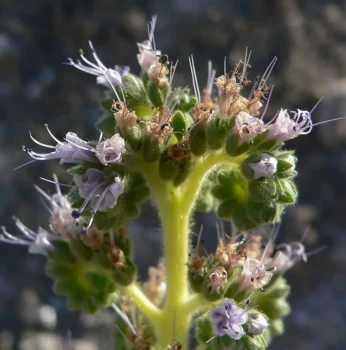
Palmer’s phacelia is a native annual forb that belongs to the waterleaf family. Don’t let its modest size fool you – this little powerhouse packs serious visual punch with its distinctive blue to purple tubular flowers that unfurl in coiled clusters, creating an almost otherworldly appearance in the garden. The deeply lobed, hairy leaves add wonderful texture even when the plant isn’t in bloom.
Where Does It Call Home?
This southwestern beauty is native to four states: Arizona, Nevada, New Mexico, and Utah. In the wild, you’ll find it thriving in desert washes, rocky slopes, and other challenging terrain where many plants fear to grow. It’s perfectly adapted to the boom-and-bust cycle of desert rainfall, making it an ideal choice for water-wise gardening.
- Species observed
- No observations
A Conservation Note
Before we dive into growing tips, it’s worth noting that Palmer’s phacelia has a conservation status that suggests it may be somewhat uncommon in parts of its range. If you decide to add this beauty to your garden, make sure to source seeds or plants from reputable native plant nurseries that practice responsible collection methods. Never collect from wild populations.
Why Your Garden (and Local Pollinators) Will Love It
Palmer’s phacelia is like a tiny diner that’s open early in the season when pollinators are desperately seeking their first meals of spring. The flowers are particularly attractive to:
- Native bees of various sizes
- Butterflies looking for nectar
- Other beneficial insects
As an annual, it fits beautifully into naturalized areas where you want that wild meadow look without the maintenance headaches of perennial borders. It’s also perfect for filling gaps in rock gardens or serving as a living mulch around larger desert plants.
Growing Palmer’s Phacelia Successfully
The beauty of this plant lies in its simplicity. Palmer’s phacelia thrives in USDA zones 7-10 and asks for very little once you understand its needs:
Location and Soil
- Full sun is essential – this plant loves all the sunshine it can get
- Well-draining soil is non-negotiable; sandy or rocky soil is ideal
- Poor soil? No problem! This tough customer actually prefers lean conditions
Planting Tips
- Direct seed in fall for spring blooms, or try early spring planting
- Scatter seeds on prepared soil surface and barely cover
- Water gently until germination, then reduce watering significantly
Care and Maintenance
- Once established, water sparingly – overwatering is more dangerous than drought
- No fertilizer needed (and actually not recommended)
- Allow plants to self-seed for a naturalized colony
- Enjoy the show and resist the urge to fuss over it
Perfect Garden Companions
Palmer’s phacelia plays well with other drought-tolerant natives and desert plants. Consider pairing it with desert marigold, brittlebush, or penstemon species for a stunning southwestern display. In rock gardens, it creates beautiful contrasts with architectural succulents and cacti.
The Bottom Line
Palmer’s phacelia proves that native doesn’t have to mean boring, and drought-tolerant doesn’t have to mean ugly. This charming annual brings authentic southwestern character to your garden while supporting local ecosystems and requiring minimal resources. Just remember to source responsibly and let this little gem show you how beautiful simplicity can be.
Whether you’re creating a full-scale xeriscape or just looking for something special to fill a challenging sunny spot, Palmer’s phacelia delivers beauty, ecological value, and the satisfaction that comes from growing something truly special in your own backyard.