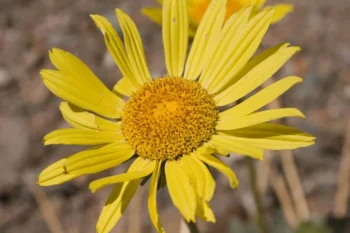
Panamint Daisy: A Rare Desert Gem Worth Growing Responsibly
If you’re looking to add a splash of sunshine to your desert garden, the Panamint daisy (Enceliopsis covillei) might just be the showstopper you’ve been searching for. This remarkable native California perennial brings bright yellow blooms and silvery foliage to some of the harshest landscapes on Earth – and it can do the same for your drought-tolerant garden.
What Makes the Panamint Daisy Special
The Panamint daisy is a true California native, endemic to the desert regions of the Golden State, particularly around the Panamint Mountains and Death Valley area. This hardy perennial forb produces stunning sunflower-like blooms with bright yellow petals surrounding prominent central discs, creating a cheerful contrast against its distinctive silvery-gray foliage.
As a member of the sunflower family, this desert dweller has adapted perfectly to California’s arid landscapes. The plant grows as a non-woody herbaceous perennial, meaning it lacks significant woody tissue but returns year after year from its root system.
- Species observed
- No observations
A Word of Caution: Rarity Status
Before you rush to add this beauty to your shopping list, there’s something important you need to know. The Panamint daisy has a Global Conservation Status of S2?, indicating it’s considered rare and potentially vulnerable. This means if you choose to grow this special plant, it’s crucial to source it responsibly from reputable nurseries that propagate from legally collected seeds or cuttings – never from wild-harvested plants.
Why Grow Panamint Daisy in Your Garden
Despite its rarity status, there are compelling reasons to consider this native gem for the right garden setting:
- Exceptional drought tolerance: Once established, it thrives with minimal water
- Pollinator magnet: The bright blooms attract native bees, butterflies, and other desert pollinators
- Low maintenance: Perfect for busy gardeners who want beauty without the fuss
- Unique aesthetic: The silvery foliage and golden blooms create stunning visual interest
- California native: Supports local ecosystems and requires fewer resources than non-native alternatives
Perfect Garden Settings
The Panamint daisy shines in specific garden types where its natural desert origins are celebrated:
- Xeriscape gardens: Ideal for water-wise landscaping designs
- Desert gardens: A natural fit alongside other desert natives
- Rock gardens: Thrives in well-draining, rocky conditions
- Native plant gardens: Perfect for California native plant enthusiasts
Growing Conditions and Care
Success with Panamint daisy comes down to mimicking its natural desert habitat:
Location and Light
Plant your Panamint daisy in full sun where it can soak up those desert rays. This sun-lover needs at least 6-8 hours of direct sunlight daily to thrive and produce its spectacular blooms.
Soil Requirements
The secret to success? Excellent drainage. This desert native cannot tolerate wet feet and will quickly succumb to root rot in heavy, clay soils. Sandy or rocky soil that drains quickly is ideal. If your soil is heavy, consider creating a raised bed or adding coarse sand and gravel to improve drainage.
Watering Wisdom
Once established, the Panamint daisy is remarkably drought tolerant. During its first year, provide occasional deep watering to help establish the root system, but after that, natural rainfall should suffice in most areas. In fact, overwatering is more likely to harm this plant than underwatering.
Climate Considerations
This desert native is suited for USDA hardiness zones 8-10, making it perfect for warm, arid regions. It may go dormant during extreme heat, which is perfectly normal – just part of its survival strategy.
Planting and Care Tips
For the best results with your Panamint daisy:
- Plant in fall: This gives the roots time to establish before the heat of summer
- Space appropriately: Give plants room to spread and ensure good air circulation
- Mulch with gravel: Use decomposed granite or small stones rather than organic mulch
- Avoid fertilizing: These adapted natives prefer lean soils and can be harmed by rich fertilizers
- Be patient: Desert plants often grow slowly but are worth the wait
Supporting Conservation Through Gardening
By choosing to grow the Panamint daisy in your garden, you’re not just adding beauty – you’re also supporting conservation efforts. Home gardens can serve as important refugia for rare native plants, helping preserve genetic diversity and providing habitat for native pollinators.
Remember, always source your plants from reputable nurseries that can verify their propagation methods. Never collect from the wild, and consider propagating your own plants from seed to share with other conservation-minded gardeners.
The Bottom Line
The Panamint daisy offers desert gardeners a unique opportunity to grow a truly special California native. While its rarity status requires responsible sourcing, the reward is a stunning, low-maintenance perennial that supports local wildlife while adding authentic desert beauty to your landscape. If you have the right conditions – full sun, excellent drainage, and minimal water – this remarkable desert daisy could be the perfect addition to your native plant collection.