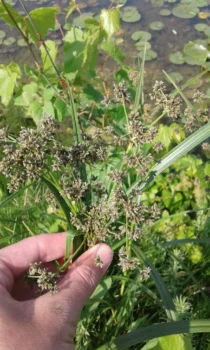
Panicled Bulrush: The Perfect Native Sedge for Your Wetland Garden
If you’ve been searching for the perfect native plant to transform that perpetually soggy spot in your yard into something beautiful and functional, meet panicled bulrush (Scirpus microcarpus). This impressive wetland sedge might just be the solution you’ve been looking for – and your local wildlife will thank you for it!
What is Panicled Bulrush?
Panicled bulrush is a tall, graceful perennial sedge that’s as practical as it is attractive. Despite its common name suggesting it’s a bulrush, this plant is actually a true sedge – part of that wonderful family of grass-like plants that includes sedges, rushes, and their relatives. Don’t worry about the botanical technicalities though; what matters is that this native beauty can reach up to 5.5 feet tall and spreads by underground rhizomes to form lovely colonies.
This isn’t your typical garden center find – panicled bulrush has a serious job to do in wetland ecosystems, and it does it with style.
Where Does Panicled Bulrush Call Home?
Talk about a well-traveled native! Panicled bulrush has one of the most impressive geographic distributions you’ll find among North American plants. This adaptable sedge grows naturally across an enormous range, from Alaska down to the lower 48 states, and throughout much of Canada including the maritime provinces.
You can find wild populations thriving in states and provinces from coast to coast: Alberta, British Columbia, Alaska, Manitoba, New Brunswick, Arizona, California, Nova Scotia, Ontario, Colorado, Prince Edward Island, Connecticut, Quebec, Saskatchewan, Yukon, Northwest Territories, Idaho, Illinois, Iowa, Kentucky, Maine, Massachusetts, Michigan, Minnesota, Montana, Nebraska, Nevada, New Hampshire, New Jersey, New Mexico, New York, North Dakota, Oregon, Pennsylvania, Rhode Island, South Dakota, Utah, Vermont, Washington, West Virginia, Wisconsin, Wyoming, Labrador, and Newfoundland. That’s quite the resume!
- Species observed
- No observations
A Word of Caution for New Jersey Gardeners
Before we dive into growing tips, there’s something important New Jersey gardeners need to know: panicled bulrush is listed as endangered in the Garden State, with a rarity status of S1. This means it’s critically imperiled in New Jersey. If you’re gardening in New Jersey and want to include this species, please make sure you source it responsibly from reputable native plant nurseries – never collect from wild populations.
Why Your Garden (and Local Wildlife) Will Love Panicled Bulrush
Here’s where panicled bulrush really shines: it’s what botanists call an obligate wetland plant. In plain English, that means it almost always grows in wetlands – making it absolutely perfect for those challenging wet spots in your landscape that seem impossible to manage.
This sedge is a fantastic choice for:
- Rain gardens and bioswales
- Pond and stream edges
- Wetland restoration projects
- Naturalistic landscapes
- Areas with poor drainage
The plant produces small white flowers in late spring that aren’t particularly showy but develop into brown seeds that provide food for wildlife. Its dense, medium-textured green foliage creates excellent cover and nesting habitat for birds and other wildlife throughout the growing season.
Growing Conditions: Give It What It Craves
Panicled bulrush is refreshingly straightforward about its needs – it wants to be wet! Here’s what this water-loving sedge requires to thrive:
Moisture Requirements
This plant has zero drought tolerance, so consistent moisture is non-negotiable. It’s happiest with its feet permanently wet or in seasonally flooded areas.
Soil Preferences
The good news is that panicled bulrush isn’t picky about soil texture – it adapts well to coarse, medium, or fine-textured soils. It prefers slightly acidic to neutral conditions (pH 5.4-7.4) and has low fertility requirements, making it perfect for naturally boggy areas.
Light Requirements
This sedge is somewhat shade intolerant, so give it full sun to light partial shade for best results.
Climate Tolerance
With its vast native range, panicled bulrush is remarkably cold hardy, tolerating temperatures down to -38°F. It grows well in USDA hardiness zones 3-9 and needs at least 80 frost-free days. It can handle annual precipitation anywhere from 12 to 38 inches.
Planting and Care Tips
Ready to add this native beauty to your wetland garden? Here’s how to succeed:
Getting Started
Panicled bulrush is routinely available from native plant nurseries and can be propagated by seed, bare root plants, containers, or sprigs. Seeds require cold stratification, so if you’re starting from seed, plan accordingly.
Establishment
Plant spacing should be relatively close – about 1,700 to 4,800 plants per acre if you’re doing large-scale plantings. For home gardens, space plants 2-3 feet apart to allow for their rhizomatous spreading habit.
Growth Expectations
Once established, panicled bulrush is a rapid grower with a long lifespan. It spreads vegetatively at a rapid rate, so give it room to expand or be prepared to manage its spread. The plant is active from spring through fall, with slower regrowth after cutting.
Maintenance
One of the best things about this native sedge is how low-maintenance it is once established. It requires no fertilization, has high fire tolerance (helpful for naturalistic management), and shows no allelopathic effects on neighboring plants.
Is Panicled Bulrush Right for Your Garden?
This remarkable native sedge is perfect for gardeners who:
- Have consistently wet or poorly drained areas to manage
- Want to create wildlife habitat
- Are working on wetland restoration or rain garden projects
- Appreciate the natural beauty of native sedge meadows
- Live in zones 3-9 and can provide full sun conditions
However, panicled bulrush might not be the best choice if you have a small garden space (it can get quite large and spreads readily), need plants for dry conditions, or want showy ornamental flowers.
The Bottom Line
Panicled bulrush proves that native plants can be both beautiful and functional. This impressive sedge transforms challenging wet areas into thriving wildlife habitat while adding natural texture and movement to the landscape. For gardeners committed to working with nature rather than against it, panicled bulrush offers a perfect opportunity to embrace the beauty of North America’s wetland heritage.
Just remember to source your plants responsibly, especially if you’re gardening in areas where populations are sensitive. When grown in the right conditions, this adaptable native will reward you with years of low-maintenance beauty and the satisfaction of supporting local ecosystems.