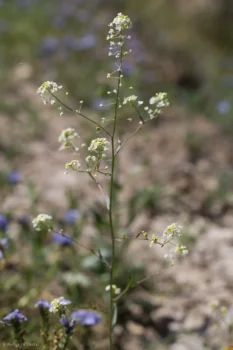
Panoche Pepperweed: A Rare California Native Worth Protecting
If you’ve stumbled across the name Panoche pepperweed (Lepidium jaredii album), you’ve discovered one of California’s botanical mysteries. This annual forb represents the kind of plant that makes native gardening both fascinating and challenging – a species so rare that most gardeners will never encounter it, yet so important that it deserves our attention and protection.
What Makes Panoche Pepperweed Special?
Panoche pepperweed belongs to the mustard family and shares the typical characteristics of its genus – it’s a non-woody flowering plant (what botanists call a forb) that completes its entire life cycle in a single growing season. Like other members of the Lepidium genus, it likely produces small, clustered flowers and has the peppery characteristics that give pepperweeds their common name.
Where Does It Call Home?
This native plant is found exclusively in California, making it a true Golden State endemic. Its limited distribution contributes to its rarity, and its conservation status of S2T2 indicates that it faces significant threats in the wild.
- Species observed
- No observations
A Word of Caution: Rarity Matters
Here’s where things get serious, fellow gardeners. Panoche pepperweed carries a rare conservation status, which means this plant is walking a tightrope toward potential extinction. If you’re ever fortunate enough to encounter seeds or plants of this species, it’s crucial that you:
- Only obtain material from reputable, ethical sources
- Never collect from wild populations
- Verify that any commercial sources are using responsibly propagated material
- Consider participating in conservation efforts if opportunities arise
The Growing Challenge
Unfortunately, detailed growing information for Panoche pepperweed remains elusive – a common challenge with rare native plants. What we do know is that as an annual forb native to California, it likely thrives in the state’s Mediterranean climate conditions. Most California natives prefer:
- Well-draining soils
- Minimal summer water once established
- Full sun to partial shade
- Protection from harsh winds
Should You Grow Panoche Pepperweed?
The honest answer? Probably not, and here’s why. With its extremely rare status and limited availability of growing information, Panoche pepperweed isn’t a practical choice for most home gardeners. Instead, consider supporting this species through conservation efforts while choosing more readily available California natives for your garden.
Better Alternatives for Your Garden
If you’re drawn to the idea of growing native pepperweeds, consider these more common California relatives:
- Virginia pepperweed (Lepidium virginicum)
- Clasping pepperweed (Lepidium perfoliatum)
- Other native mustard family plants like wild radish or field mustard
The Bigger Picture
Panoche pepperweed reminds us that native gardening isn’t just about what we can grow – it’s also about what we help protect. Sometimes the most important thing we can do for a rare plant is to leave it alone in its natural habitat while supporting conservation efforts from afar.
While you might never have Panoche pepperweed gracing your garden beds, knowing about these rare gems helps us appreciate the incredible diversity of California’s native flora and the importance of protecting every species, no matter how small or seemingly insignificant.
After all, every plant has a story, and some stories are too precious to lose.