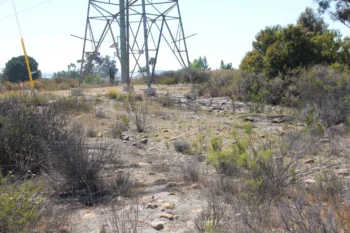
Parish’s Eryngo: A Rare California Native Worth Protecting
If you’re passionate about native plants and conservation, Parish’s eryngo (Eryngium aristulatum var. parishii) might catch your attention—but this isn’t your typical garden center find. This remarkable California native comes with a conservation story that every gardener should know before considering it for their landscape.
What Is Parish’s Eryngo?
Parish’s eryngo is a native forb that belongs to the carrot family, though you’d never guess it from its spiky, thistle-like appearance. As a biennial or perennial plant, it lacks the woody stems of shrubs and trees, instead producing its dramatic flower heads from herbaceous growth that emerges from ground-level buds.
This plant goes by a few scientific names in botanical literature, including Eryngium parishii and Eryngium aristulatum ssp. parishii, but they all refer to the same special variety that calls California home.
Where Does It Grow Naturally?
Parish’s eryngo is exclusively native to California, making it a true Golden State endemic. However, its distribution is extremely limited, which brings us to an important conservation concern.
- Species observed
- No observations
A Plant in Peril: Understanding Its Rarity
Important Conservation Alert: Parish’s eryngo is listed as endangered in San Diego County, with a global conservation status that reflects its precarious position in the wild. This isn’t just another rare plant—it’s a species fighting for survival in its natural habitat.
If you’re considering growing Parish’s eryngo, this rarity status means you should only obtain plants or seeds from reputable, conservation-minded sources that practice responsible propagation methods. Never collect from wild populations, as this could further threaten the species’ survival.
Why Would You Want to Grow Parish’s Eryngo?
Despite its rarity challenges, there are compelling reasons to include this native in conservation-focused gardens:
- Conservation value: Growing rare natives helps preserve genetic diversity and supports conservation efforts
- True California heritage: As a state endemic, it represents authentic local flora
- Unique garden character: Eryngos typically offer distinctive architectural form and interesting textures
- Educational opportunity: Perfect for teaching about plant conservation and California’s natural heritage
Growing Conditions and Care
While specific growing requirements for Parish’s eryngo aren’t well-documented due to its rarity, we can make educated assumptions based on other California eryngos and its native habitat preferences. Most native eryngos thrive in:
- Well-draining soils
- Full sun to partial shade
- Mediterranean climate conditions
- Minimal summer water once established
As a forb adapted to California conditions, it likely prefers the state’s natural wet winter/dry summer pattern that characterizes Mediterranean climates.
Is Parish’s Eryngo Right for Your Garden?
This plant is best suited for:
- Conservation gardens: Dedicated spaces for preserving rare species
- Native plant collections: Specialized gardens focused on California flora
- Educational landscapes: Botanic gardens, nature centers, or demonstration gardens
- Experienced native gardeners: Those committed to proper care of rare species
Parish’s eryngo is NOT recommended for:
- Casual gardeners looking for easy-care options
- Large-scale landscaping projects
- Gardens where proper care cannot be guaranteed
The Responsible Choice
If you’re drawn to Parish’s eryngo, remember that with great plants comes great responsibility. Only source this rare native from conservation organizations, specialized native plant nurseries, or seed exchanges that work with propagated—not wild-collected—material.
Consider also exploring other California eryngo species that may be less rare but offer similar garden appeal, such as Eryngium armatum (coastal eryngo) or other varieties within the Eryngium aristulatum complex that aren’t as critically threatened.
By choosing to grow rare natives like Parish’s eryngo responsibly, you become part of a vital conservation effort, helping ensure that future generations can appreciate California’s incredible plant diversity both in gardens and in the wild.