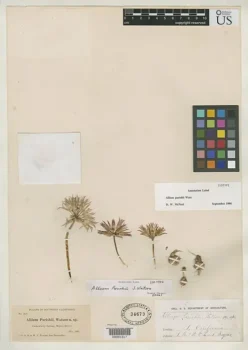
Parish’s Onion: A Rare Gem for Your Native Garden
If you’re looking to add a touch of southwestern charm to your garden while supporting local wildlife, Parish’s onion (Allium parishii) might just be the perfect addition. This delightful little perennial brings both beauty and ecological benefits to the right garden setting, though there are some important considerations to keep in mind before planting.
What Makes Parish’s Onion Special?
Parish’s onion is a native forb that belongs to the diverse Allium family. Unlike its woody cousins, this charming plant is herbaceous, meaning it lacks significant woody tissue and dies back to ground level each year. As a perennial, it returns year after year, making it a reliable addition to your native plant collection.
This lovely plant produces clusters of small, pink to purple flowers arranged in attractive umbels that bloom in spring. The flowers sit atop slender stems, creating a delicate display that adds subtle color and texture to the landscape.
Where Does Parish’s Onion Call Home?
Parish’s onion is native to the southwestern United States, specifically found in Arizona and California. This limited geographic distribution makes it a true regional specialty that connects your garden directly to the local ecosystem.
- Species observed
- No observations
Important Conservation Note
Before you rush out to plant Parish’s onion, there’s something crucial you need to know. This species has a Global Conservation Status of S3, which means it’s considered vulnerable. With typically only 21 to 100 occurrences and between 3,000 and 10,000 individuals in the wild, Parish’s onion is quite rare.
What does this mean for gardeners? While we absolutely encourage growing this beautiful native plant, it’s essential to source your bulbs responsibly. Never collect from wild populations, and only purchase from reputable native plant nurseries that ethically propagate their stock.
Why Choose Parish’s Onion for Your Garden?
There are several compelling reasons to include Parish’s onion in your landscape:
- Native plant benefits: Supports local ecosystems and wildlife
- Pollinator magnet: The flowers attract native bees and other beneficial insects
- Low maintenance: Once established, requires minimal care
- Drought tolerance: Perfect for water-wise gardening
- Unique appeal: Adds authentic regional character to your landscape
Perfect Garden Settings
Parish’s onion thrives in specific garden environments. Consider it for:
- Rock gardens and xerophytic landscapes
- Native plant gardens
- Naturalized areas with minimal irrigation
- Pollinator gardens focused on regional species
This plant is particularly well-suited for gardeners in USDA hardiness zones 8-10 who want to create authentic southwestern landscapes.
Growing Parish’s Onion Successfully
The good news is that Parish’s onion isn’t particularly fussy once you understand its basic needs:
Soil Requirements: Well-draining soil is absolutely essential. This plant cannot tolerate waterlogged conditions and will quickly decline in heavy, poorly draining soils.
Light Needs: Provide full sun to partial shade. In extremely hot climates, some afternoon shade can be beneficial.
Water Wisdom: While Parish’s onion needs regular water during its growing season, it’s quite drought-tolerant once established. Reduce watering significantly during its dormant period.
Planting and Care Tips
For the best success with Parish’s onion:
- Plant bulbs in fall for spring blooms
- Space bulbs according to nursery recommendations
- Improve soil drainage if necessary by adding sand or gravel
- Water regularly during the growing season, then reduce significantly
- Allow foliage to die back naturally to feed the bulb
- Avoid fertilizing, as native plants typically prefer lean soils
Supporting Conservation Through Gardening
By choosing to grow Parish’s onion responsibly, you’re doing more than just beautifying your landscape. You’re participating in conservation efforts by maintaining genetic diversity outside of wild populations and creating habitat corridors for pollinators and other wildlife.
Remember, the key is responsible sourcing. Always verify that your plants come from ethical propagation rather than wild collection. This ensures that your gardening choices support rather than harm wild populations of this vulnerable species.
Parish’s onion may be small and subtle, but its contribution to your native garden ecosystem is anything but minor. With proper care and responsible sourcing, this charming southwestern native can bring both beauty and ecological value to your landscape for years to come.