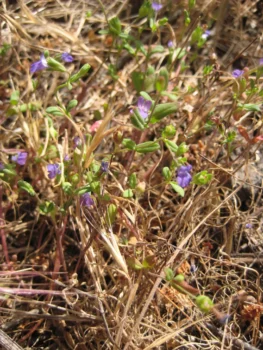
Parry’s Blue Eyed Mary: A Rare California Gem Worth Protecting
If you’re passionate about native plants and conservation, Parry’s blue eyed Mary (Collinsia parryi) might just capture your heart – and your sense of environmental responsibility. This delicate annual wildflower is one of California’s rarest botanical treasures, making it both a coveted addition to native plant gardens and a species that desperately needs our help.
What Makes Parry’s Blue Eyed Mary Special?
Parry’s blue eyed Mary is a charming annual forb that belongs to the plantain family. Like other members of the Collinsia genus, it produces distinctive small flowers with blue upper petals and white lower petals, creating the characteristic blue-eyed appearance that gives the plant its common name. This herbaceous wildflower lacks any woody tissue and completes its entire life cycle within a single growing season.
You might also encounter this plant listed under its synonyms Collinsia antonina Hardham or Collinsia antonina Hardham ssp. purpurea in older botanical references.
A California Endemic in Crisis
This beautiful wildflower is native exclusively to California, where it clings to existence in just a handful of locations. The geographical distribution of Parry’s blue eyed Mary is extremely limited within the Golden State, making every population precious.
- Species observed
- No observations
Conservation Alert: Collinsia parryi carries a Global Conservation Status of S1, meaning it’s critically imperiled. With typically five or fewer occurrences and very few remaining individuals (fewer than 1,000), this species is dancing on the edge of extinction. Some sources also list it as S2S3, reflecting the uncertainty and ongoing assessment of its precarious status.
Should You Grow Parry’s Blue Eyed Mary?
Here’s where things get both exciting and complicated. If you’re a native plant enthusiast, supporting rare California natives like Parry’s blue eyed Mary can be incredibly rewarding – but it comes with serious responsibility.
Why You Might Want to Grow It:
- Support conservation of a critically endangered California native
- Enjoy delicate, charming blue and white flowers
- Attract small native bees and pollinators to your garden
- Perfect for native wildflower gardens and naturalized areas
- Low-maintenance annual that fits well in drought-tolerant landscapes
Important Considerations:
- Extremely rare – only plant with responsibly sourced seeds or plants
- Never collect from wild populations
- Limited availability through commercial sources
- Requires specific California growing conditions
Growing Parry’s Blue Eyed Mary Successfully
If you can source seeds or plants responsibly (through reputable native plant societies or conservation nurseries), Parry’s blue eyed Mary can thrive in the right conditions.
Ideal Growing Conditions:
- Climate: USDA Zones 8-10 (Mediterranean California climate)
- Light: Partial shade to full sun
- Soil: Well-draining soil is essential
- Water: Low water requirements once established
- Garden type: Native plant gardens, wildflower meadows, rock gardens
Planting and Care Tips:
- Direct seed in fall for spring germination
- Mimic natural conditions with minimal soil amendment
- Allow plants to self-seed to maintain populations
- Provide minimal supplemental water during dry periods
- Pair with other California native annuals and perennials
A Conservation-Minded Choice
Growing Parry’s blue eyed Mary isn’t just about adding another pretty flower to your garden – it’s about participating in conservation. By cultivating this rare species with responsibly sourced material, you’re helping to preserve genetic diversity and potentially providing seeds for future restoration efforts.
Remember, the key word here is responsibly. Never collect seeds or plants from wild populations, and always verify that any material you purchase comes from legitimate conservation sources. When in doubt, contact your local native plant society or botanical garden for guidance on ethical sources.
If you can’t find Parry’s blue eyed Mary through responsible sources, consider growing other Collinsia species or California native annuals that offer similar ecological benefits without the conservation concerns. Sometimes the best way to help a rare plant is to grow its more common relatives and support the habitats they all depend on.