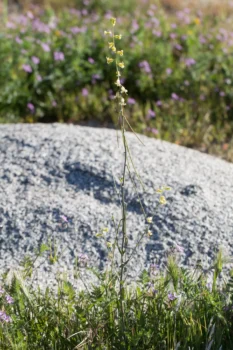
Payson’s Wild Cabbage: A Rare California Native Worth Preserving
If you’re passionate about California native plants and love supporting rare species, Payson’s wild cabbage (Caulanthus simulans) might just capture your heart. This delicate annual herb represents one of nature’s more vulnerable treasures, quietly growing in select spots across California’s foothills and valleys.
What Makes Payson’s Wild Cabbage Special?
Payson’s wild cabbage is an annual forb – essentially a soft-stemmed herbaceous plant that completes its entire life cycle in one growing season. Despite its common name suggesting a relationship to garden cabbage, this native California wildflower produces charming clusters of small, pale flowers that dance on slender stems in spring.
As a member of the mustard family, this plant showcases the classic four-petaled flowers that make identification easier for native plant enthusiasts. The blooms typically appear in white to pale yellow hues, creating a subtle but beautiful display during California’s wildflower season.
Where You’ll Find This California Native
Caulanthus simulans calls California home exclusively, with populations scattered throughout the state. This endemic species has adapted specifically to California’s unique climate and soil conditions, making it a true representative of the Golden State’s botanical heritage.
- Species observed
- No observations
A Word of Caution: Rarity Matters
Here’s where things get serious. Payson’s wild cabbage carries a Global Conservation Status of S3, meaning it’s considered vulnerable to extinction. With only an estimated 21 to 100 occurrences and between 3,000 to 10,000 individuals remaining in the wild, this isn’t your typical backyard wildflower.
If you’re considering adding this species to your garden, responsible sourcing is absolutely critical. Never collect seeds or plants from wild populations – this could harm already fragile communities. Instead, seek out reputable native plant nurseries that propagate from ethically sourced material.
Growing Payson’s Wild Cabbage Successfully
Since this is an annual plant, Payson’s wild cabbage follows California’s natural rhythm of winter rains and summer drought. Here’s what you need to know:
Ideal Growing Conditions
- Climate zones: USDA zones 8-10, matching California’s Mediterranean climate
- Sunlight: Full sun to partial shade
- Soil: Well-draining soils that don’t stay soggy
- Water: Moderate water during spring growth, then allow to dry as summer approaches
Planting and Care Tips
The key to success with Payson’s wild cabbage lies in mimicking its natural growing cycle:
- Direct seed in fall when winter rains begin
- Provide moderate water through the spring growing season
- Allow plants to set seed and naturally dry down in summer
- Let dropped seeds remain for next year’s crop
- Avoid over-watering, especially in summer months
Garden Role and Landscape Design
Payson’s wild cabbage works beautifully in specialized native California gardens, particularly those focused on rare or unusual species. Its delicate stature makes it perfect for:
- Native wildflower meadows
- Specialized rare plant collections
- Educational gardens highlighting California’s botanical diversity
- Naturalistic landscapes that celebrate local flora
Supporting Pollinators and Wildlife
Like many members of the mustard family, Payson’s wild cabbage provides nectar for small native bees and other pollinators during its spring blooming period. While we don’t have extensive data on its specific wildlife benefits, native plants generally support the intricate web of insects, birds, and other creatures that have co-evolved with them over thousands of years.
Should You Grow Payson’s Wild Cabbage?
The answer depends on your gardening goals and commitment level. If you’re:
- Passionate about rare plant conservation
- Dedicated to growing only California natives
- Willing to source plants responsibly
- Interested in supporting vulnerable species
Then Payson’s wild cabbage could be a meaningful addition to your garden. However, if you’re looking for a low-maintenance ground cover or showy display plant, you might want to consider more common California natives that can provide similar benefits without the conservation concerns.
Remember, growing rare plants is a responsibility as much as a privilege. By choosing to cultivate Payson’s wild cabbage with ethically sourced material, you’re not just adding beauty to your garden – you’re participating in conservation efforts that help ensure this vulnerable species continues to grace California’s landscapes for generations to come.