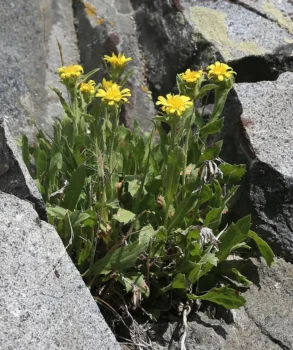
Peirson’s Serpentweed: A Rare California Native Worth Protecting
Meet Peirson’s serpentweed (Tonestus peirsonii), a little-known California native that deserves a spot in the conversation about rare and remarkable wildflowers. While this perennial herb might not be the showiest plant in your garden, it carries the important distinction of being a vulnerable species that needs our attention and care.
What Makes Peirson’s Serpentweed Special?
This charming perennial belongs to the aster family and grows as what botanists call a forb – essentially a soft-stemmed flowering plant without woody growth. Unlike shrubs or trees, Peirson’s serpentweed stays low to the ground, with its growing points tucked safely at or below soil level, helping it survive through challenging seasons.
What truly sets this plant apart is its rarity. With a Global Conservation Status of S3 (Vulnerable), Peirson’s serpentweed exists in limited numbers – typically between 3,000 and 10,000 individuals across just 21 to 100 known locations. That makes every single plant precious.
Where Does It Call Home?
Peirson’s serpentweed is exclusively a California native, making it a true Golden State endemic. This means you won’t find it growing wild anywhere else in the world – California is its one and only natural home.
- Species observed
- No observations
Should You Grow Peirson’s Serpentweed?
Here’s where things get interesting. While we absolutely support growing native plants, Peirson’s serpentweed presents a special case. Because of its vulnerable status, this isn’t a plant you should casually add to your shopping list.
If you’re considering growing this rare beauty:
- Only obtain plants or seeds from reputable, conservation-minded nurseries
- Ensure any material is ethically and legally sourced
- Never collect from wild populations
- Consider it a conservation effort rather than just gardening
The Conservation Garden Approach
Growing Peirson’s serpentweed is less about creating a stunning landscape feature and more about participating in plant conservation. If you’re passionate about protecting California’s botanical heritage and have access to responsibly sourced material, this perennial could be a meaningful addition to a specialized native plant collection.
As a perennial herb, it offers the advantage of returning year after year, slowly building a sustainable population in your garden that could potentially contribute to the species’ long-term survival.
Growing Challenges and Considerations
Unfortunately, detailed growing information for Peirson’s serpentweed isn’t widely available – a common challenge with rare native plants. This lack of cultivation knowledge means growing it successfully might require some experimentation and patience.
What we do know is that as a California native, it has evolved to thrive in the state’s Mediterranean climate patterns. Like many California natives, it likely prefers:
- Well-draining soil
- Minimal summer water once established
- Full sun to partial shade
- Protection from harsh winds
Alternative Native Options
If you’re drawn to supporting California native plants but want something more readily available and better understood, consider other members of the aster family that share similar growing requirements. Many California native wildflowers offer the same ecological benefits without the conservation concerns.
The Bottom Line
Peirson’s serpentweed represents both an opportunity and a responsibility. While it’s not the easiest or most practical choice for most gardeners, those committed to plant conservation and equipped with proper knowledge and ethically sourced material can play a role in protecting this vulnerable species.
Remember: with great rarity comes great responsibility. If you choose to grow this special plant, you’re not just gardening – you’re participating in conservation history.