Pennsylvania Clubmoss: A Fascinating Ancient Plant for Your Woodland Garden
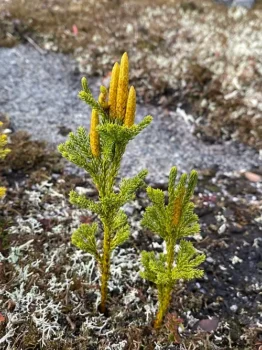
Have you ever stumbled across what looks like a tiny evergreen tree growing on the forest floor and wondered what it could be? You might have discovered Pennsylvania clubmoss (Lycopodium hickeyi), one of nature’s most fascinating living fossils. This remarkable little plant has been around for millions of years, quietly carpeting woodland floors across eastern North America with its distinctive tree-like appearance.
What Exactly Is Pennsylvania Clubmoss?
Pennsylvania clubmoss isn’t actually a moss at all – it’s a lycopod, which puts it in a completely different category of plants. Think of lycopods as the ancient cousins of ferns. Like ferns, they reproduce through spores rather than seeds or flowers, and they’ve been doing their thing since long before dinosaurs roamed the earth. Pretty cool, right?
This perennial plant creates colonies that spread slowly across the forest floor, forming those enchanting miniature forest scenes that make you feel like you’ve shrunk down to fairy size. Each individual plant looks like a tiny evergreen tree, complete with branching stems and needle-like leaves.
Where You’ll Find This Living Fossil
Pennsylvania clubmoss is native to both Canada and the United States, making its home across a surprisingly wide range. You can find it growing naturally from the Maritime provinces of Canada down through much of the eastern United States. It thrives in states including Maine, Vermont, New Hampshire, Massachusetts, Connecticut, New York, Pennsylvania, and extends south into North Carolina and Tennessee, with populations also found as far west as Minnesota and even Washington state.
- Species observed
- No observations
A Word of Caution: Rarity Matters
Before you get too excited about adding this charming plant to your garden, there’s something important to know. Pennsylvania clubmoss has a rarity status of S3 in New Jersey, meaning it’s considered vulnerable. This little plant faces challenges in the wild due to habitat loss and its incredibly slow growth rate.
If you’re absolutely determined to include it in your landscape, please only source it from reputable native plant nurseries that propagate their own stock – never harvest it from the wild. Better yet, consider creating habitat that might naturally attract it over time.
What Makes It Special in the Garden
Pennsylvania clubmoss brings a unique prehistoric charm to woodland gardens that you simply can’t get from any other plant. Here’s why gardeners find it so appealing:
- Creates stunning miniature landscape effects
- Evergreen foliage provides year-round interest
- Forms slowly spreading colonies that look completely natural
- Adds educational value as a living fossil
- Requires virtually no maintenance once established
Ideal Growing Conditions
If you’re lucky enough to have the right conditions, Pennsylvania clubmoss thrives in:
- Partial to full shade (think deep woodland)
- Acidic, well-draining soil
- Consistent moisture without being waterlogged
- Cool, humid environments
- USDA hardiness zones 3-7
The truth is, this plant is notoriously difficult to establish in cultivation. It has very specific soil requirements and depends on complex relationships with soil fungi that can be nearly impossible to replicate in a typical garden setting.
How to Identify Pennsylvania Clubmoss
Spotting Pennsylvania clubmoss in the wild is easier once you know what to look for:
- Height: Usually stays under 6 inches tall
- Appearance: Looks like tiny evergreen trees with branching stems
- Leaves: Small, scale-like, arranged spirally around the stems
- Growth pattern: Forms spreading colonies connected by underground runners
- Habitat: Found in acidic woodland soils, often under conifers
Wildlife and Ecological Benefits
While Pennsylvania clubmoss doesn’t offer nectar or berries like flowering plants, it plays an important role in woodland ecosystems. It helps prevent soil erosion, provides shelter for tiny woodland creatures, and contributes to the complex web of relationships that keep forest floors healthy.
The Bottom Line
Pennsylvania clubmoss is undeniably fascinating, but it’s probably not the best choice for most home gardens. Its slow growth, specific requirements, and conservation concerns make it more of a admire in the wild plant than a grow at home option. Instead, consider supporting its conservation by preserving woodland habitats and choosing other native groundcovers that are easier to establish and maintain.
If you’re passionate about creating woodland habitat, focus on planting native trees and shrubs that will create the conditions where Pennsylvania clubmoss might naturally appear someday. Sometimes the best way to garden with native plants is to create the ecosystems they love and let nature do the rest.