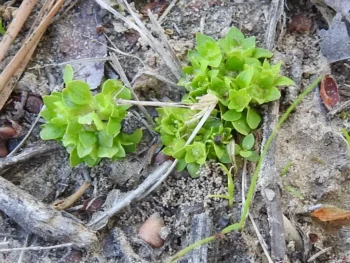
Petiteplant: A Tiny Native Gem for Southeastern Gardens
If you’ve never heard of petiteplant (Lepuropetalon spathulatum), you’re not alone. This diminutive native is one of those blink and you’ll miss it plants that quietly occupies a special niche in the southeastern United States. But don’t let its small stature fool you – this little forb has a big story to tell about resilience, adaptation, and the intricate beauty of native flora.
What Is Petiteplant?
Petiteplant is a tiny native forb that belongs to a very small family of plants. As its common name suggests, everything about this plant is petite – from its succulent-like spathulate leaves to its minuscule white flowers. This annual to perennial herb (it can behave as either depending on conditions) lacks any woody tissue and keeps its growing points right at or below ground level, making it perfectly adapted to its specialized habitat.
You might also encounter this plant listed under its botanical synonym Pyxidanthera spathulata, though Lepuropetalon spathulatum is the currently accepted scientific name.
Where Does Petiteplant Call Home?
This native charmer has made itself at home across the southeastern United States, growing naturally in Alabama, Arkansas, Florida, Georgia, Louisiana, Mississippi, North Carolina, Oklahoma, South Carolina, and Texas. It’s particularly fond of the coastal plain regions where it has evolved to thrive in specific wetland conditions.
- Species observed
- No observations
A Word of Caution: Rarity Matters
Before you start planning where to plant petiteplant in your garden, there’s something important to know: this species is considered rare in parts of its range. In Alabama, it carries an S2 rarity status, meaning it’s imperiled and at risk of disappearing from the state. If you’re interested in growing petiteplant, please only source it from reputable native plant nurseries that propagate their stock responsibly – never collect from wild populations.
Why Grow Petiteplant?
You might wonder why anyone would want to grow such a tiny, inconspicuous plant. Here’s why petiteplant deserves a spot in the right garden:
- It’s a true native that supports local ecosystems
- Perfect for native plant enthusiasts who appreciate subtle beauty
- Ideal for rock gardens or specialized native plant collections
- Adds botanical diversity to naturalized landscapes
- Requires minimal space due to its diminutive size
Growing Conditions and Care
Petiteplant has some specific preferences that reflect its natural habitat. This little plant is classified as a facultative wetland species across its range, meaning it usually grows in wetlands but can occasionally be found in drier spots.
Here’s what petiteplant needs to thrive:
- Moisture: Consistent moisture is key – think moist to wet soils rather than dry conditions
- Light: Adapts to partial shade through full sun
- Climate: Best suited for USDA hardiness zones 7-10
- Soil: Tolerates various soil types as long as moisture needs are met
The Challenge of Growing Petiteplant
Let’s be honest – petiteplant isn’t the easiest native to establish in cultivation. Its specialized habitat requirements and tiny size make it more of a challenge than your typical native wildflower. This plant is best suited for dedicated native plant gardeners who have experience with wetland species and don’t mind the extra attention required.
Landscape Design Ideas
If you’re up for the challenge, petiteplant works beautifully in:
- Specialized native plant collections
- Rock gardens with consistent moisture
- Bog gardens or constructed wetlands
- Naturalized areas that mimic its native habitat
- Educational gardens focused on rare native plants
Wildlife and Pollinator Benefits
While petiteplant’s flowers are extremely small, they may still provide nectar for tiny insects and other small pollinators. Every native plant, no matter how small, plays a role in supporting local wildlife and maintaining biodiversity.
The Bottom Line
Petiteplant is definitely not for every gardener or every garden. Its rarity status means it requires responsible sourcing, and its specific growing needs make it more challenging than many native alternatives. However, for the right gardener in the right location, this tiny native offers the satisfaction of growing something truly special – a rare piece of southeastern flora that connects your garden directly to the unique ecosystems of the coastal plain.
If petiteplant seems too challenging or difficult to source responsibly, consider other native wetland species from your region that can provide similar ecological benefits while being easier to establish and maintain.