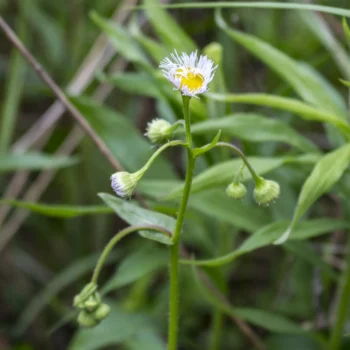
Philadelphia Fleabane: A Charming Native Wildflower for Easy-Care Gardens
If you’re looking for a low-maintenance native wildflower that brings delicate beauty and ecological benefits to your garden, Philadelphia fleabane might be just the ticket. This unassuming little daisy relative has been quietly brightening North American landscapes for centuries, and it’s ready to do the same for your yard.
What is Philadelphia Fleabane?
Philadelphia fleabane (Erigeron philadelphicus var. philadelphicus) is a native North American forb that produces cheerful, daisy-like flowers from spring through early summer. Don’t let the fleabane name put you off – it’s an old folk name that has nothing to do with actual fleas! This resilient plant can live as either a biennial or perennial, adapting to whatever your garden conditions throw at it.
You might also encounter this plant listed under several botanical synonyms, including Erigeron philadelphicus var. glaber or Erigeron purpureus, but they all refer to the same delightful wildflower.
Where Does Philadelphia Fleabane Call Home?
This native beauty has one of the most impressive geographic ranges you’ll find in North American flora. Philadelphia fleabane grows naturally throughout Canada – from British Columbia to Newfoundland – and across virtually every U.S. state, from Alaska’s Northwest Territories down to Florida and from coast to coast. It’s even found in California, Nevada, and the Southwest!
- Species observed
- No observations
Being native to such a vast area means this plant is incredibly adaptable and well-suited to a wide range of growing conditions across USDA hardiness zones 2-9.
Garden Appeal and Aesthetic Qualities
Philadelphia fleabane may not be the showiest flower in the garden, but it has a subtle charm that grows on you. The plant produces numerous small, daisy-like flowers with white to pale pink petals surrounding bright yellow centers. These delicate blooms appear in loose, airy clusters that dance gently in the breeze, creating a cottage garden feel wherever they’re planted.
The flowers typically appear from late spring through early summer, providing a soft, naturalized look that pairs beautifully with other wildflowers and native plants.
Perfect Garden Roles
This versatile native works wonderfully in several garden settings:
- Meadow and prairie gardens: Philadelphia fleabane naturalizes beautifully among grasses and other wildflowers
- Wildlife gardens: Its flowers provide nectar for various pollinators
- Cottage gardens: The informal, delicate appearance fits perfectly with the relaxed cottage garden aesthetic
- Naturalized areas: Ideal for areas where you want a wild look with minimal maintenance
Growing Conditions Made Simple
One of Philadelphia fleabane’s greatest strengths is its adaptability. This easy-going native thrives in:
- Light conditions: Full sun to partial shade
- Soil: Adaptable to various soil types, though it prefers average to moist conditions
- Moisture: Average moisture levels work well, but it can handle some variation
- pH: Tolerant of different soil pH levels
Planting and Care Tips
Philadelphia fleabane is refreshingly low-maintenance once established:
- Planting: Can be direct-seeded in fall or early spring, or planted as transplants
- Spacing: Allow room for natural spreading – this plant likes to self-sow
- Watering: Minimal watering needed once established; drought-tolerant
- Fertilizing: No fertilization necessary – it’s adapted to natural soil conditions
- Maintenance: Deadhead spent flowers if you want to prevent excessive self-seeding
Wildlife and Pollinator Benefits
Philadelphia fleabane is a valuable addition to any wildlife-friendly garden. Its small but numerous flowers attract a variety of beneficial insects, including native bees, butterflies, and other small pollinators. The extended blooming period provides a reliable nectar source during the important spring and early summer months when pollinators are most active.
A Word of Caution
While Philadelphia fleabane is generally well-behaved, it can self-seed enthusiastically in optimal conditions. This isn’t necessarily a bad thing if you want a naturalized look, but gardeners preferring more controlled plantings should deadhead spent flowers before seeds mature.
The Bottom Line
Philadelphia fleabane offers native plant gardeners an easy-to-grow option that provides subtle beauty, supports local wildlife, and requires minimal care once established. Its incredible adaptability and extensive native range mean it’s likely right at home in your garden, no matter where you live in North America. Whether you’re creating a meadow garden, adding to a wildlife habitat, or simply want a low-maintenance perennial that gives back to the ecosystem, Philadelphia fleabane deserves a spot in your landscape.