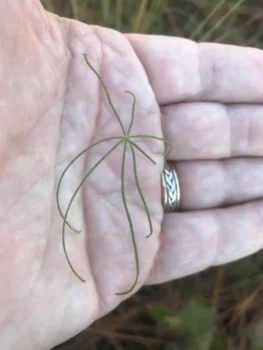
Piedmont Leather-Root: A Hidden Gem for Southeastern Native Gardens
If you’re looking to add a touch of authentic southeastern charm to your native garden, meet the piedmont leather-root (Orbexilum lupinellum). This delightful perennial forb might not be the showiest plant in your garden, but what it lacks in drama, it more than makes up for in ecological value and quirky character.
What Exactly Is Piedmont Leather-Root?
Piedmont leather-root is a native perennial that belongs to the legume family – think of it as a distant cousin to your garden peas, but with a much more adventurous spirit. This herbaceous plant produces small but charming purple to violet pea-like flowers arranged in dense, upright spikes that bloom from spring through early summer. The compound leaves typically have 3-5 leaflets, giving the plant a delicate, almost fern-like appearance.
You might also see this plant listed under its former scientific names, Psoralea lupinella or Rhytidomene lupinellus, if you’re browsing older gardening references or botanical texts.
Where Does It Call Home?
This southeastern native has a relatively limited range, naturally occurring in Alabama, Florida, Georgia, North Carolina, and South Carolina. It’s particularly fond of the Piedmont region – hence the name – where it thrives in the rolling hills and transitional landscapes between the mountains and coastal plains.
- Species observed
- No observations
A Plant Worth Protecting
Here’s where things get interesting: piedmont leather-root has a conservation status of S3S4, which means it’s considered uncommon to fairly uncommon throughout its range. This isn’t a plant you’ll find at your typical garden center, and that’s exactly why it deserves a spot in your native garden. By growing this species, you’re participating in conservation efforts and helping maintain genetic diversity of our native flora.
Important note: If you decide to grow piedmont leather-root, make sure you source your plants or seeds from reputable native plant nurseries that use responsibly collected material. Never collect from wild populations.
Why Your Garden (and Local Wildlife) Will Love It
Despite its modest appearance, piedmont leather-root is a pollinator magnet. The small flowers are perfectly sized for native bees, and butterflies find them irresistible. As a member of the legume family, this plant also has the superpower of fixing nitrogen in the soil, essentially fertilizing itself and neighboring plants – talk about being a good garden neighbor!
The plant works beautifully in:
- Native plant gardens and wildlife habitats
- Wildflower meadows and prairie restorations
- Naturalized landscapes and slopes for erosion control
- Low-maintenance garden areas
Growing Conditions and Care
One of the best things about piedmont leather-root is its easy-going nature. This plant is perfectly adapted to southeastern growing conditions and thrives in USDA hardiness zones 7-9.
Light requirements: Full sun to partial shade (though it prefers more sun)
Soil needs: Well-drained soils; tolerates poor, sandy, or clay soils once established
Water requirements: Drought tolerant after establishment; doesn’t need regular watering
Maintenance: Extremely low maintenance – this is a plant it and forget it kind of perennial
Planting and Propagation Tips
Getting piedmont leather-root established in your garden is straightforward, but patience is key. Like many legumes, the seeds have hard coats and benefit from scarification (lightly scratching or nicking the seed coat) before planting to improve germination rates.
Plant in spring after the last frost, and don’t worry if growth seems slow at first – this plant is putting energy into developing a strong root system. Once established, you’ll have a long-lived perennial that requires virtually no care.
The Bottom Line
Piedmont leather-root might not win any beauty contests, but it’s exactly the kind of plant that makes a native garden special. It’s authentic, ecologically valuable, and perfectly adapted to southeastern conditions. Plus, there’s something deeply satisfying about growing a plant that most people have never heard of – you’ll definitely have the most unique garden on the block!
If you’re gardening in zones 7-9 and want to support local wildlife while adding a piece of southeastern botanical heritage to your landscape, piedmont leather-root deserves serious consideration. Just remember to source it responsibly, and you’ll be helping preserve this uncommon native for future generations to enjoy.