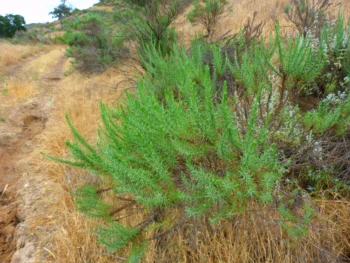
Pinebush: A Drought-Tough California Native That Deserves More Love
Meet pinebush (Ericameria pinifolia), a charming California native shrub that’s been quietly thriving in the Golden State’s chaparral and woodlands while most gardeners have never heard of it. This unsung hero of the drought-tolerant garden world deserves a spot on your radar – and possibly in your landscape.
What Makes Pinebush Special?
Don’t let the name fool you – pinebush isn’t actually related to pine trees, though its needle-like foliage gives it that distinctive pine-esque appearance. This perennial shrub brings year-round structure to your garden with its dense, green foliage and compact growth habit. While it may not win any flashy flower contests (its white blooms are rather modest), pinebush makes up for it with rock-solid reliability and water-wise credentials.
Where Does Pinebush Come From?
Pinebush is a true California endemic, meaning it’s found nowhere else in the world except the Golden State. This makes it extra special for California gardeners looking to support their local ecosystem. However, it’s worth noting that pinebush has a somewhat limited distribution even within California, which is why it carries a conservation status that suggests we should be mindful about sourcing.
- Species observed
- No observations
Why You Might Want to Grow Pinebush
Here’s where pinebush really shines:
- Water-wise champion: With high drought tolerance and medium moisture needs, this plant laughs in the face of water restrictions
- Low maintenance: Slow growth rate means less pruning, and it has low fertility requirements
- Pollinator friendly: Those small flowers may look understated, but they’re valuable to native bees and other pollinators
- Year-round interest: Dense foliage provides structure through all seasons
- Wildlife habitat: As a native plant, it supports local ecosystem relationships
The Reality Check: Potential Drawbacks
Let’s be honest – pinebush isn’t for everyone:
- Slow grower: Patience required – this isn’t a plant for instant gratification
- Limited availability: You won’t find this at your typical garden center
- Specific growing conditions: Needs well-draining soil and doesn’t tolerate shade
- Fire considerations: Has low fire tolerance, so placement matters in fire-prone areas
Perfect Garden Situations for Pinebush
Pinebush works beautifully in:
- Mediterranean-style gardens
- Native plant landscapes
- Rock gardens and xeriscapes
- Water-wise residential landscapes
- Pollinator gardens with a California theme
Growing Conditions That Make Pinebush Happy
Success with pinebush comes down to mimicking its natural habitat:
- Soil: Well-draining is non-negotiable – it adapts to coarse and medium-textured soils but says no thanks to clay
- Sun exposure: Full sun lover that won’t tolerate shade
- Water: Medium water needs during establishment, then very drought tolerant
- Climate: Thrives in USDA zones 8-10, needs at least 365 frost-free days
- pH: Adaptable to slightly acidic to alkaline soils (pH 6.5-8.5)
Planting and Care Tips
Getting Started:
- Source plants responsibly from native plant nurseries or conservation organizations
- Plant in fall for best establishment before summer heat
- Space plants 4-6 feet apart (you can fit 700-1700 per acre if you’re thinking big)
- Ensure excellent drainage – amend heavy soils with pumice or gravel
Ongoing Care:
- Water regularly the first year, then reduce significantly
- Avoid fertilizing – this plant prefers lean conditions
- Minimal pruning needed due to slow growth rate
- Watch for establishment – seedling vigor is low, so be patient
Size and Growth Expectations
Pinebush typically reaches 6-8 feet tall and wide at maturity, though it may stay smaller in garden conditions. At 20 years, expect it to max out around 4 feet. Its slow growth rate means you’re investing in long-term garden structure rather than quick impact.
A Conservation Note
With its S2S3 conservation status, pinebush is somewhat uncommon in the wild. If you choose to grow it, please source plants from reputable native plant nurseries that propagate from ethical sources rather than wild collection. By growing pinebush in cultivation, you’re actually helping preserve this special California native.
The Bottom Line
Pinebush won’t give you instant garden drama, but it will give you something perhaps more valuable: a reliable, water-wise, California native that supports local wildlife while requiring minimal care once established. It’s a plant for gardeners who appreciate subtle beauty and want to make a positive environmental impact. Just remember – good things come to those who wait, and pinebush is definitely worth the wait.