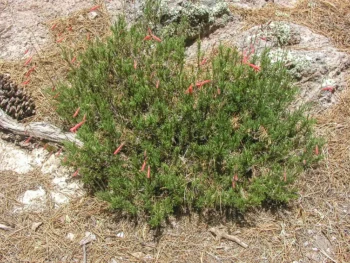
Pineneedle Beardtongue: A Tiny Powerhouse for Southwestern Gardens
If you’re looking for a native plant that packs a serious punch in a small package, meet the pineneedle beardtongue (Penstemon pinifolius). This delightful little perennial might just be the perfect addition to your drought-tolerant garden – assuming you live in the right climate and can source it responsibly.
What Makes Pineneedle Beardtongue Special?
Don’t let its diminutive size fool you. This native forb herb brings serious charm to any landscape with its needle-like foliage and brilliant red-orange to scarlet tubular flowers. The plant forms a low, compact mat that spreads gracefully without becoming aggressive, making it an ideal choice for gardeners who want maximum impact with minimal fuss.
As a true native of the American Southwest, pineneedle beardtongue has evolved to thrive in some pretty challenging conditions. It’s a perennial that comes back year after year, rewarding patient gardeners with increasingly beautiful displays as it matures.
Where Does It Call Home?
Pineneedle beardtongue is native to Arizona and New Mexico, where it has adapted to the unique growing conditions of the Southwestern United States. This limited natural range makes it a special find for native plant enthusiasts in these areas.
- Species observed
- No observations
A Word About Rarity
Here’s something important to know: pineneedle beardtongue has a Global Conservation Status of S3S4, indicating it may have some conservation concerns in parts of its range. If you’re interested in growing this beauty, please make sure to purchase from reputable nurseries that propagate their plants responsibly rather than collecting from wild populations.
Perfect Spots in Your Garden
This little charmer shines in several garden settings:
- Rock gardens where it can cascade over stones
- Xeriscape plantings as a colorful ground cover
- Native plant gardens celebrating Southwestern flora
- Border edges where its compact habit won’t overwhelm neighbors
- Desert-themed landscapes seeking authentic regional character
Growing Pineneedle Beardtongue Successfully
The good news? This plant is refreshingly low-maintenance once you understand its needs. Here’s how to keep your pineneedle beardtongue happy:
Climate Requirements: Hardy in USDA zones 5-9, though it performs best in areas with hot, dry summers and mild winters – think Arizona and New Mexico climates.
Sun and Soil: Full sun is essential for the best flowering display. Well-drained soil is absolutely critical – this plant cannot tolerate soggy conditions and will quickly succumb to root rot in heavy, poorly-draining soils.
Water Needs: Once established, pineneedle beardtongue is remarkably drought tolerant. During its first year, provide regular water to help establish the root system, then gradually reduce watering frequency. Mature plants typically thrive on natural rainfall alone in appropriate climates.
Care Tips for Success
- Deadhead spent flowers to encourage continued blooming throughout the growing season
- Avoid overwatering – when in doubt, err on the dry side
- Mulch lightly with gravel or decomposed granite rather than organic mulches that retain moisture
- Divide clumps every few years if they become too large for their space
Wildlife Benefits
Those brilliant red-orange flowers aren’t just pretty to look at – they’re practically hummingbird magnets! The tubular shape and vibrant color are perfectly designed to attract these tiny pollinators. Native bees also appreciate the blooms, making this plant a valuable addition to pollinator-friendly gardens.
Is Pineneedle Beardtongue Right for Your Garden?
Consider adding pineneedle beardtongue to your garden if you:
- Live in USDA zones 5-9, particularly in arid or semi-arid climates
- Want to support native wildlife, especially hummingbirds
- Appreciate low-maintenance plants that deliver high visual impact
- Are creating a water-wise landscape
- Have well-draining soil and full sun locations to offer
However, this might not be the plant for you if you’re in a humid climate, have heavy clay soil, or prefer plants that tolerate regular irrigation. Remember, working with your local climate and conditions always yields the best results.
When grown in the right conditions with responsibly sourced plants, pineneedle beardtongue offers years of low-maintenance beauty while supporting local ecosystems. It’s a small plant with a big personality – exactly what many Southwestern gardens need.