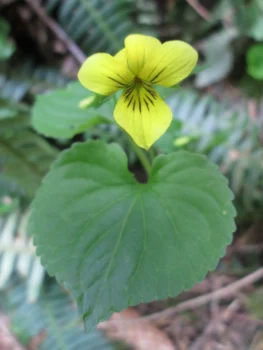
Pioneer Violet: A Charming Native Groundcover for Shady Gardens
If you’re looking for a delightful native plant that thrives in the shadowy corners of your garden, meet the pioneer violet (Viola glabella). This charming little perennial is like nature’s way of adding sunshine to the shade – literally! With its cheerful yellow blooms and heart-shaped leaves, this northwestern native brings both beauty and ecological value to your landscape.
What Makes Pioneer Violet Special?
Pioneer violet is a native forb – that’s garden-speak for a soft-stemmed perennial that comes back year after year without any woody growth. Think of it as the friendly neighbor of the plant world: low-maintenance, reliable, and always ready to brighten your day with its sunny disposition.
This lovely native calls home to a impressive range across western North America, naturally growing in Alberta, British Columbia, Alaska, California, Idaho, Montana, Oregon, and Washington. It’s truly a plant that knows how to adapt to different climates while maintaining its Northwestern charm.
- Species observed
- No observations
Why Your Garden Will Love Pioneer Violet
Here’s where pioneer violet really shines (pun intended!). This plant is perfect for those tricky shaded spots where many other flowers struggle to perform. Its aesthetic appeal lies in its simplicity – small, bright yellow flowers dance above kidney-shaped, bright green leaves, creating a carpet of color that’s both subtle and striking.
Perfect Garden Situations
Pioneer violet is your go-to choice for:
- Woodland gardens where it can naturalize beautifully
- Shade gardens that need a pop of color
- Native plant gardens focused on regional flora
- Rain gardens, thanks to its facultative wetland status
- Groundcover in areas where grass struggles
Growing Conditions and Care
The beauty of pioneer violet is its easy-going nature. This plant thrives in USDA hardiness zones 3-8, making it suitable for a wide range of climates. Here’s what it needs to flourish:
- Light: Partial to full shade (it actually prefers to stay out of harsh sunlight)
- Soil: Moist, well-draining soil that doesn’t get bone dry
- Water: Regular moisture, especially during dry spells
- Temperature: Cool conditions – it’s not a fan of intense heat
Planting and Care Tips
Getting started with pioneer violet is refreshingly simple. Plant it in spring or fall, giving each plant about 6-12 inches of space. Once established, this little charmer is remarkably self-sufficient. It will often self-seed, gradually creating natural drifts that look like they’ve always belonged in your garden.
Maintenance is minimal – just ensure it doesn’t dry out completely during hot summer months, and you’ll be rewarded with reliable blooms and attractive foliage throughout the growing season.
Wildlife and Pollinator Benefits
Here’s where pioneer violet really earns its keep in the ecosystem. This native beauty attracts small native bees, flies, and butterflies who appreciate its nectar. Even better, it serves as a host plant for fritillary butterfly caterpillars, making it a valuable addition to any pollinator-friendly garden.
Its wetland status varies by region – from facultative wetland in Alaska and the Western Mountains to facultative in the Arid West – but this adaptability means it can handle varying moisture levels, making it useful for rain gardens and areas with fluctuating water conditions.
The Bottom Line
Pioneer violet is one of those delightful native plants that makes you wonder why more people don’t grow it. It’s beautiful, easy-care, ecologically beneficial, and perfectly suited to those challenging shady spots in your garden. Whether you’re creating a woodland retreat or simply want to add some native charm to your landscape, this cheerful little violet is ready to pioneer its way into your heart – and your garden.