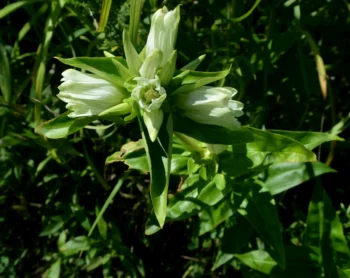
Plain Gentian: A Delicate Native Treasure for Your Garden
If you’re looking to add a touch of understated elegance to your native garden, meet the plain gentian (Gentiana alba). This charming little perennial might not shout for attention like some of its flashier garden companions, but its quiet beauty and ecological benefits make it a wonderful addition to the right landscape.
What is Plain Gentian?
Plain gentian is a native North American perennial that belongs to the gentian family. True to its name, this plant offers simple, unassuming beauty with small white to cream-colored flowers that appear in late summer and early fall. As a forb (that’s garden-speak for a non-woody flowering plant), it forms low clumps of opposite leaves and delicate blooms that add subtle charm to any naturalized setting.
Where Does Plain Gentian Call Home?
This native beauty has quite an impressive range across North America. You’ll find plain gentian growing naturally from southern Canada down through much of the central and eastern United States, including Manitoba, Ontario, Arkansas, Illinois, Indiana, Iowa, Kansas, Kentucky, Maryland, Michigan, Minnesota, Missouri, Nebraska, North Carolina, Ohio, Oklahoma, Pennsylvania, West Virginia, and Wisconsin.
- Species observed
- No observations
A Word About Rarity
Here’s something important to know: plain gentian is considered rare in Arkansas, where it holds an S1 rarity status. This means it’s critically imperiled in that state. If you’re interested in growing this beauty, please make sure to source your plants or seeds from reputable native plant nurseries that practice responsible propagation. Never collect plants from the wild!
Why Choose Plain Gentian for Your Garden?
While plain gentian might seem modest, it brings several wonderful qualities to your landscape:
- Native authenticity: Support local ecosystems by growing plants that naturally belong in your region
- Pollinator magnet: The nectar-rich flowers attract native bees and butterflies during the late-season bloom period
- Low maintenance: Once established, this perennial requires minimal care
- Versatile placement: Works well in prairie gardens, naturalized areas, and woodland edges
- Extended interest: Blooms when many other plants are winding down for the season
Where Plain Gentian Thrives
Plain gentian is surprisingly adaptable when it comes to growing conditions. Here’s what this flexible native prefers:
- Sunlight: Full sun to partial shade
- Soil: Moist to moderately dry conditions; tolerates various soil types
- Hardiness: Grows well in USDA zones 3-8
- Moisture: While it can handle some dry periods, it generally prefers consistent moisture
Interestingly, plain gentian shows different moisture preferences depending on where you live. In most regions, it’s considered facultative upland, meaning it usually prefers non-wetland conditions but can tolerate some wetness. In the Great Plains, it’s even more flexible about moisture levels.
Perfect Garden Companions
Plain gentian shines brightest in naturalized settings rather than formal flower beds. Consider incorporating it into:
- Prairie restoration projects
- Native wildflower meadows
- Woodland edge plantings
- Low-maintenance ground cover areas
- Pollinator gardens focused on native species
Planting and Care Tips
Growing plain gentian successfully is refreshingly straightforward:
- Timing: Fall planting often works best for establishment
- Spacing: Allow room for natural spreading and clump formation
- Watering: Provide consistent moisture during the first growing season, then reduce as the plant establishes
- Maintenance: Minimal care needed once established; avoid heavy fertilization
- Patience: Like many native perennials, plain gentian may take a season or two to really settle in and show its best growth
The Bottom Line
Plain gentian might not be the showiest plant in your garden, but it offers something equally valuable: authentic native beauty that supports local wildlife while requiring minimal maintenance from you. Its late-season blooms provide nectar when many other flowers have finished, making it a thoughtful addition to any pollinator-friendly landscape.
Just remember to source your plants responsibly, especially given its rarity in some areas. When grown thoughtfully, plain gentian can be a lovely way to connect your garden to the natural heritage of North America while supporting the native bees and butterflies that depend on plants like these.