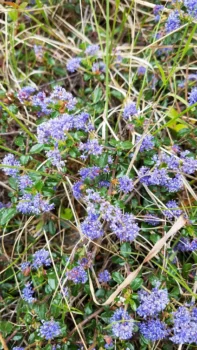
Point Reyes Ceanothus: A Coastal California Gem for Your Garden
If you’re looking for a low-maintenance, drought-tolerant ground cover that’s as tough as it is beautiful, meet the Point Reyes ceanothus (Ceanothus gloriosus var. gloriosus). This California native shrub might just be the perfect addition to your water-wise garden – especially if you’re dealing with slopes, coastal conditions, or simply want to support local wildlife while keeping your water bill in check.
What Makes Point Reyes Ceanothus Special?
Point Reyes ceanothus is a perennial shrub that stays relatively low to the ground, making it an excellent choice for ground cover applications. Native to California’s coastal regions, this hardy plant has adapted to thrive in challenging conditions that would leave other plants struggling. Its dense, spreading growth habit and glossy dark green leaves create an attractive carpet of foliage year-round.
Come spring, this unassuming shrub transforms into a spectacular display of deep blue to purple flower clusters that practically hum with pollinator activity. Bees, butterflies, and other beneficial insects can’t resist these nectar-rich blooms, making your garden a buzzing hub of activity during flowering season.
Where Does It Come From?
As its common name suggests, Point Reyes ceanothus calls the coastal areas of Northern California home. This native plant is specifically adapted to the unique conditions found in California’s coastal regions, where it has evolved to handle everything from salt spray to drought conditions.
- Species observed
- No observations
Perfect for Mediterranean and Coastal Gardens
Point Reyes ceanothus shines in Mediterranean-style landscapes, drought-tolerant gardens, and coastal settings. Its low, spreading form makes it ideal for:
- Slope stabilization and erosion control
- Ground cover in large areas
- Native plant gardens
- Water-wise landscaping
- Coastal gardens where salt tolerance is important
This shrub typically grows to about 1-3 feet tall but can spread 6-15 feet wide, so give it plenty of room to stretch out and show off its natural form.
Growing Conditions and Care
One of the best things about Point Reyes ceanothus is how little fuss it requires once established. Here’s what it needs to thrive:
Sunlight: Full sun to partial shade, though it performs best with plenty of morning sun
Soil: Well-draining soil is absolutely essential – this plant cannot tolerate soggy conditions. It adapts well to poor soils and doesn’t need rich, fertile ground to flourish.
Water: Drought tolerant once established, but benefits from occasional deep watering during the first year. After that, natural rainfall should be sufficient in most areas.
Climate: Hardy in USDA zones 8-10, making it suitable for mild coastal and Mediterranean climates
Planting and Care Tips
Fall is the ideal time to plant Point Reyes ceanothus, giving it a full season to establish before facing summer drought conditions. Here are some key tips for success:
- Choose a location with excellent drainage – consider planting on a slope or in raised beds if your soil tends to stay wet
- Water regularly during the first growing season to help establish a strong root system
- Avoid fertilizing – this native prefers lean soils and too much nutrition can actually harm it
- Minimal pruning needed, but you can lightly shape after flowering if desired
- Once established, avoid overwatering as this can lead to root rot
Supporting Pollinators and Wildlife
Beyond its good looks and low-maintenance nature, Point Reyes ceanothus is a pollinator powerhouse. The spring flower display attracts numerous bee species, butterflies, and other beneficial insects. This makes it an excellent choice for gardeners interested in supporting local ecosystems and creating habitat for native wildlife.
A Note About Conservation
Point Reyes ceanothus has a conservation status that suggests it may be somewhat uncommon in its native range. If you decide to add this beauty to your garden, make sure to source your plants from reputable native plant nurseries that propagate their stock responsibly rather than collecting from wild populations.
Is Point Reyes Ceanothus Right for Your Garden?
This native shrub is perfect for gardeners who want maximum impact with minimal effort, especially in water-wise landscapes. It’s ideal if you’re dealing with slopes that need stabilization, want to support local pollinators, or simply love the idea of a beautiful, low-maintenance ground cover that’s perfectly adapted to California’s coastal conditions.
Just remember that patience is key – like many California natives, Point Reyes ceanothus may take a year or two to really hit its stride, but once established, it’ll reward you with years of beauty and virtually maintenance-free performance.