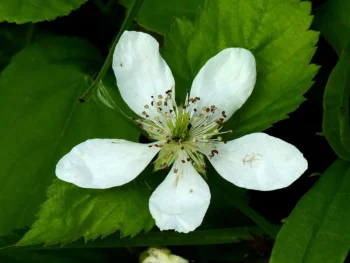
Pollock’s Mill Blackberry: A Rare Native Gem Worth Protecting
If you’re a native plant enthusiast looking for something truly special, Pollock’s Mill blackberry (Rubus gnarus) might catch your attention. This little-known native shrub represents one of nature’s rare treasures, found only in a small corner of the northeastern United States. But before you start planning where to plant it, there’s an important conservation story you need to know.
What Makes Pollock’s Mill Blackberry Special?
Pollock’s Mill blackberry is a low-growing perennial shrub that typically stays under 1.5 feet tall, never exceeding 3 feet at maturity. As a member of the blackberry family, it likely produces the characteristic white or pink flowers followed by aggregate berries that we associate with its more common relatives. However, what truly sets this plant apart isn’t its appearance—it’s its rarity.
A Plant on the Edge: Geographic Distribution and Rarity
This native species has an extremely limited range, found only in Connecticut, New Jersey, and New York. In New Jersey, it holds the special designation of Highlands Listed with a rarity status of SH.1, indicating it’s critically rare within the state. Globally, it carries a conservation status of S3?, meaning its population status is uncertain but potentially vulnerable.
- Species observed
- No observations
The Conservation Dilemma: Should You Grow It?
Here’s where things get interesting—and complicated. While Pollock’s Mill blackberry is undoubtedly a fascinating native plant that deserves protection, its extreme rarity raises important ethical questions about cultivation. If you’re considering adding this species to your garden, you should only do so with plants from verified, responsibly sourced material that doesn’t impact wild populations.
The reality is that very little is known about this plant’s specific growing requirements, propagation methods, or cultivation needs. This lack of information reflects just how uncommon encounters with this species are, even among botanists and native plant specialists.
Growing Conditions and Care (What We Know)
Based on its geographic range, Pollock’s Mill blackberry likely thrives in USDA hardiness zones 5-7. As a native of the northeastern states, it presumably tolerates the region’s typical climate conditions. However, specific details about soil preferences, moisture requirements, and light needs remain largely unknown due to limited study and cultivation experience.
If you do obtain this species through legitimate conservation efforts or specialized native plant sources, treat it with the care you’d give any rare plant:
- Monitor it closely for signs of stress or disease
- Document its growth patterns and preferences
- Consider participating in citizen science projects that could help researchers learn more about the species
- Never collect from wild populations
Alternative Choices for Your Native Garden
If Pollock’s Mill blackberry proves too elusive or ethically complicated for your garden, consider these more readily available native Rubus species that offer similar ecological benefits:
- Red raspberry (Rubus idaeus) – widely available and excellent for wildlife
- Black raspberry (Rubus occidentalis) – native and delicious
- Dewberry (Rubus flagellaris) – low-growing like R. gnarus
The Bigger Picture: Why Rare Plants Matter
Species like Pollock’s Mill blackberry remind us that our native plant communities contain incredible diversity, much of which remains poorly understood. These rare plants often represent unique genetic resources and ecological relationships that took thousands of years to develop. While we may not be able to grow every rare species in our gardens, we can support their conservation by:
- Supporting native plant societies and botanical gardens
- Participating in habitat restoration projects
- Choosing well-known native alternatives for our landscapes
- Advocating for the protection of natural areas where rare species survive
Pollock’s Mill blackberry may remain a mystery to most gardeners, but its story highlights the importance of protecting the full spectrum of our native plant heritage. Sometimes the most valuable plants are those we admire from afar while working to ensure they have a future in the wild.