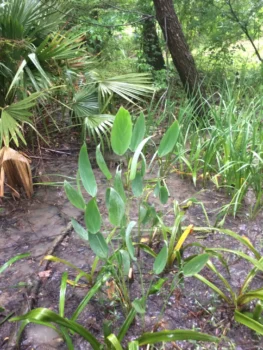
Powdery Alligator-Flag: A Stunning Native Wetland Giant for Your Water Garden
If you’re looking to add some serious drama to your water garden or wetland landscape, meet the powdery alligator-flag (Thalia dealbata). This spectacular native perennial brings a touch of the tropics to American gardens while supporting local ecosystems in ways that truly matter.
What Makes Powdery Alligator-Flag Special?
Don’t let the quirky name fool you – this plant is pure elegance. Powdery alligator-flag gets its common name from the distinctive powdery white coating on the undersides of its large, paddle-shaped leaves. Rising 6 to 10 feet tall, this impressive perennial creates an almost prehistoric presence in the landscape with its broad, blue-green foliage and tall spikes of delicate purple flowers that appear in summer.
As a native forb (that’s a fancy term for a non-woody flowering plant), Thalia dealbata has been gracing American wetlands long before European settlement. It’s a true son of the South, naturally occurring across eleven states including Alabama, Arkansas, Georgia, Illinois, Kentucky, Louisiana, Mississippi, Missouri, Oklahoma, South Carolina, and Texas.
- Species observed
- No observations
A Plant That Demands Respect
Here’s where things get interesting – and important. In Alabama, powdery alligator-flag holds a rarity status of S1, meaning it’s critically imperiled in that state. If you’re planning to add this beauty to your garden, please source your plants responsibly from reputable native plant nurseries rather than collecting from wild populations.
This plant is what wetland scientists call an obligate wetland species, meaning it almost always occurs in wetlands across all regions where it grows. Translation? This isn’t your average garden perennial – it needs serious moisture to thrive.
Perfect for the Right Garden
Powdery alligator-flag isn’t for everyone, but if you have the right conditions, it’s absolutely magical. This plant shines in:
- Water gardens and pond margins
- Bog gardens and rain gardens
- Naturalized wetland plantings
- Areas with consistently wet soil or standing water
- Tropical-themed landscapes in suitable climates
Its towering height and broad leaves make it an excellent choice for creating privacy screens or dramatic backdrops in water features. The architectural quality of its foliage adds structure to informal plantings while the summer flower spikes provide seasonal interest.
Growing Powdery Alligator-Flag Successfully
Successfully growing this wetland wonder is all about understanding its needs. Hardy in USDA zones 6 through 11, powdery alligator-flag may die back to its roots in colder areas but will return each spring.
Light and Location
Give your powdery alligator-flag full sun to partial shade. While it can tolerate some shade, you’ll get the best growth and flowering in brighter locations.
Water Requirements
This is the make-or-break factor. Your plant needs consistently moist to wet soil, or even standing water up to 6 inches deep. Think pond edge, not flower border. If you don’t have natural wet conditions, you’ll need to create them through irrigation or by choosing a naturally low-lying area of your property.
Soil Preferences
Powdery alligator-flag isn’t picky about soil type – clay, loam, or sandy soils all work fine as long as they stay wet and have good organic content. The richer the better when it comes to feeding this vigorous grower.
Planting and Care Tips
- Plant in spring after the last frost when soil has warmed
- Space plants 3 to 4 feet apart – they’ll spread to fill the space
- Apply a thick layer of organic mulch to retain moisture and suppress weeds
- Cut back dead foliage in late fall or early spring
- Divide clumps every 3 to 4 years to manage spread and maintain vigor
- No fertilizer needed in rich, organic soils
Wildlife and Pollinator Benefits
While powdery alligator-flag may not be the busiest pollinator plant in your garden, its summer flowers do attract bees and butterflies. More importantly, as a native wetland plant, it provides crucial habitat structure for wetland wildlife and helps support the complex web of life that depends on healthy aquatic ecosystems.
Should You Grow Powdery Alligator-Flag?
The answer depends entirely on your garden conditions and goals. If you have a water garden, bog area, or consistently wet spot in your landscape, and you’re gardening within its native range, powdery alligator-flag can be an absolutely stunning addition. Its dramatic foliage and impressive size create instant impact, while its native status means you’re supporting local ecosystems.
However, if you don’t have the right wet conditions, this isn’t the plant for you. Don’t try to make it work in regular garden beds – you’ll only end up frustrated, and the plant will struggle or die.
For the right gardener in the right location, powdery alligator-flag offers a chance to grow something truly special – a piece of America’s wetland heritage that brings both beauty and ecological value to the home landscape. Just remember to source responsibly and give it the wet feet it craves.