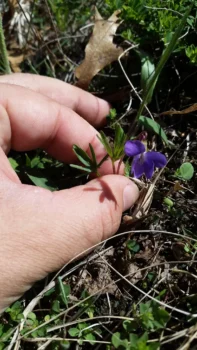
Prairie Violet: A Charming Native Groundcover for Your Garden
If you’re looking to add a touch of prairie charm to your landscape, the prairie violet (Viola pedatifida) might just be the perfect addition to your native plant collection. This delightful little perennial brings both beauty and ecological value to gardens across much of North America, though it deserves our careful attention due to its conservation status in some areas.
What Makes Prairie Violet Special
Prairie violet stands out from other violets with its distinctive bird’s-foot shaped leaves that are deeply divided into narrow segments. Come spring, this charming forb produces lovely purple flowers that dance above the foliage, creating a carpet of color in naturalized areas. As a perennial plant, it returns year after year, gradually spreading to form attractive colonies.
Also known by the botanical synonym Viola palmata var. pedatifida, this native violet is classified as a forb – essentially a non-woody perennial that dies back to ground level each winter and regrows from underground buds.
Where Prairie Violet Calls Home
This resilient native plant has an impressive range, naturally occurring across a vast swath of North America. You’ll find prairie violet growing wild from the Canadian provinces of Alberta, Manitoba, Ontario, and Saskatchewan, down through much of the central and western United States including Arizona, Arkansas, Colorado, Illinois, Indiana, Iowa, Kansas, Michigan, Minnesota, Missouri, Montana, Nebraska, New Mexico, North Dakota, Ohio, Oklahoma, South Dakota, Wisconsin, and Wyoming.
- Species observed
- No observations
A Note About Conservation
Before you rush out to plant prairie violet, there’s an important consideration: in Arkansas, this species has a rarity status of S2, meaning it’s uncommon and potentially vulnerable. If you’re gardening in areas where prairie violet is rare, please ensure you source your plants or seeds from reputable native plant nurseries rather than collecting from wild populations. This helps protect existing native stands while still allowing you to enjoy this beautiful plant in your garden.
Perfect Garden Settings
Prairie violet thrives in several garden styles:
- Prairie gardens and grassland restorations
- Native plant gardens
- Naturalized landscapes
- Wildflower meadows
- Low-maintenance groundcover areas
This adaptable plant works beautifully as a groundcover in naturalized settings, where it can spread and create drifts of spring color. It’s particularly at home in prairie-style plantings alongside native grasses and other wildflowers.
Growing Conditions and Care
One of prairie violet’s greatest strengths is its adaptability. This hardy perennial grows well in USDA hardiness zones 3-8, making it suitable for much of the northern United States and southern Canada.
When it comes to moisture, prairie violet is quite flexible. According to wetland indicators, it typically prefers upland conditions (non-wetland areas) but can tolerate some moisture variation. In most regions, it’s classified as Facultative Upland, meaning it usually grows in drier sites but can handle occasional wet conditions. Only in the Western Mountains, Valleys, and Coast region is it considered Obligate Upland, where it almost never tolerates wetland conditions.
For best results, provide:
- Full sun to partial shade
- Well-draining soil
- Sandy to loamy soil types
- Minimal supplemental watering once established
Benefits for Wildlife and Pollinators
Like many native violets, prairie violet is a valuable addition to pollinator gardens. Its spring flowers provide nectar for native bees, butterflies, and other small pollinators when few other flowers are available. The plant also serves as a host for fritillary butterfly caterpillars, supporting these beautiful butterflies throughout their life cycle.
Planting and Maintenance Tips
Prairie violet is refreshingly low-maintenance once established. Here are some tips for success:
- Start from seed or purchase plants from native plant nurseries
- Fall planting often yields better establishment
- Allow the plant to self-seed for natural colony formation
- Minimal fertilization needed – prairie violet prefers lean soils
- Very little watering required after the first growing season
- No need for deadheading unless you want to prevent self-seeding
Is Prairie Violet Right for Your Garden?
Prairie violet makes an excellent choice for gardeners who want to support native ecosystems while enjoying a beautiful, low-maintenance groundcover. It’s particularly well-suited for those creating prairie-style gardens or anyone looking to reduce lawn areas with native alternatives.
Consider prairie violet if you:
- Want to support native pollinators and butterflies
- Prefer low-maintenance plants
- Are creating a prairie or wildflower garden
- Need groundcover for naturalized areas
- Want to reduce water usage in your landscape
Just remember to source your plants responsibly, especially if you’re gardening in areas where this charming violet is becoming uncommon. With proper sourcing and care, prairie violet can be a delightful addition that brings both beauty and ecological value to your native plant garden for years to come.