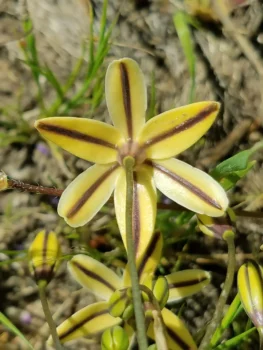
Prettyface: A Cheerful Native Bulb for Western Gardens
If you’re looking for a native plant that lives up to its name, look no further than prettyface (Triteleia ixioides scabra). This charming perennial bulb brings sunny yellow blooms to gardens across the Pacific Coast, proving that native plants can be both beautiful and low-maintenance.
What Makes Prettyface Special?
Prettyface is a herbaceous perennial forb that grows from underground bulbs, producing clusters of bright yellow, funnel-shaped flowers that dance atop slender stems in late spring and early summer. The cheerful blooms are hard to miss and add a wonderful pop of color to any native garden setting.
This plant is truly native to the western United States, specifically thriving in California and Oregon. As a perennial, it returns year after year, making it a reliable addition to your landscape that will reward you with blooms for seasons to come.
- Species observed
- No observations
Where Does Prettyface Shine in Your Garden?
Prettyface is particularly well-suited for:
- Native plant gardens and natural landscapes
- Wildflower meadows and prairie-style plantings
- Drought-tolerant garden designs
- Naturalized areas where you want low-maintenance color
This plant works beautifully in mass plantings, where its bright yellow flowers can create stunning drifts of color. It’s also an excellent choice for gardeners who want to support local ecosystems, as it attracts bees, butterflies, and other native pollinators during its blooming period.
Growing Conditions and Care
One of the best things about prettyface is how easy it is to grow once you understand its natural rhythm. This plant thrives in USDA hardiness zones 7-10 and prefers:
- Full sun to partial shade
- Well-draining soil (it won’t tolerate soggy conditions)
- Minimal summer water once established
Here’s the key to success with prettyface: embrace its natural dormancy cycle. After blooming in late spring to early summer, the plant naturally goes dormant during the hot, dry summer months. This isn’t a sign of poor health – it’s exactly what the plant is supposed to do! During this time, reduce or eliminate watering to mimic its native habitat conditions.
Planting and Care Tips
Plant prettyface bulbs in fall when soil temperatures have cooled. This gives them time to establish roots before their spring growth spurt. Here are some helpful tips for success:
- Plant bulbs about 3-4 inches deep in well-draining soil
- Space bulbs 4-6 inches apart for a natural look
- Water regularly during the growing season (fall through spring)
- Allow the plant to go dormant naturally in summer
- Avoid overwatering during the dormant period
Why Choose Prettyface?
Beyond its obvious aesthetic appeal, prettyface offers several compelling reasons to include it in your garden. As a native species, it’s perfectly adapted to local conditions and requires minimal resources once established. It supports local pollinator populations during a crucial time in their lifecycle and helps maintain the ecological connections that make native plant communities so resilient.
The plant’s drought tolerance makes it an excellent choice for water-wise gardening, and its natural dormancy period means you’ll have less maintenance work during the hottest months of the year. Plus, with its cheerful yellow blooms and easy-going nature, prettyface proves that native gardening doesn’t mean sacrificing beauty for environmental benefits.
Whether you’re creating a dedicated native plant garden or simply looking to add some low-maintenance color to your landscape, prettyface deserves a spot in western gardens. Just remember to source your bulbs from reputable native plant suppliers to ensure you’re getting true native genetics that will thrive in your local conditions.