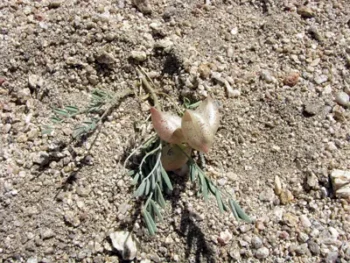
Providence Mountain Milkvetch: A Rare California Native Worth Protecting
Meet the Providence Mountain milkvetch (Astragalus nutans), a little-known annual wildflower that calls the Golden State home. While it might not be the showiest plant in your garden center, this humble native deserves our attention – and our protection.
What Makes This Plant Special
The Providence Mountain milkvetch is an annual plant, meaning it completes its entire life cycle in just one growing season. It belongs to the legume family, which gives it some pretty cool superpowers when it comes to soil health (more on that later!). You might occasionally see it listed under its synonym, Astragalus chuckwallae, but don’t let that confuse you – it’s the same plant.
Where You’ll Find It Growing Wild
This milkvetch is a true California endemic, found only within the state’s borders. It’s particularly associated with the Providence Mountains region, which gives it its common name. As a native species to the lower 48 states, it has deep roots in North American ecosystems.
- Species observed
- No observations
A Plant That Needs Our Help
Here’s where things get serious: the Providence Mountain milkvetch has a Global Conservation Status of S3, which means it’s considered vulnerable. With typically only 21 to 100 occurrences or between 3,000 and 10,000 individuals in the wild, this plant is skating on thin ice. It’s vulnerable to extirpation due to its limited range and small population size.
What this means for gardeners: If you’re considering growing this plant, please only source seeds or plants from reputable native plant nurseries that practice responsible collection methods. Never collect from wild populations.
Why Grow Providence Mountain Milkvetch?
While we don’t have extensive information about this particular species’ garden performance, there are compelling reasons to consider it:
- Conservation impact: Growing rare natives in your garden helps preserve genetic diversity
- Soil benefits: As a legume, it likely fixes nitrogen in the soil, improving fertility naturally
- True native status: Supporting plants that truly belong in California’s ecosystems
- Educational value: A conversation starter about plant conservation
Growing Tips and Considerations
Since detailed growing information for this specific species is limited, here’s what we can infer from its annual nature and native habitat:
- As an annual, it will need to reseed each year or be replanted
- Being native to California, it’s likely adapted to Mediterranean climate conditions
- Like most natives, it probably prefers well-draining soil
- It may require specific soil types or conditions found in its natural habitat
The Bottom Line
The Providence Mountain milkvetch represents something precious in our native plant world – a species that exists nowhere else on Earth except California. While it may not be the easiest plant to find or grow, its rarity makes it all the more valuable for conservation-minded gardeners.
If you’re passionate about preserving California’s botanical heritage and have experience with challenging native plants, this milkvetch could be a meaningful addition to a specialized native plant collection. Just remember: source responsibly, and consider supporting organizations working to protect its wild populations.
Sometimes the most important plants aren’t the prettiest ones – they’re the ones that need our help the most.