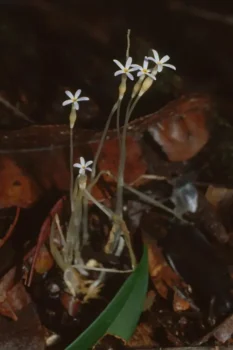
Puerto Rico Ghostplant: A Mysterious Native You Won’t Be Growing in Your Garden
Meet the Puerto Rico ghostplant (Voyria tenella), one of nature’s most unusual and mysterious native plants. Don’t let the ethereal name fool you into thinking this is your next garden centerpiece – this peculiar perennial has some very specific lifestyle choices that make it nearly impossible to cultivate in a typical home garden.
What Makes the Puerto Rico Ghostplant So Special?
The Puerto Rico ghostplant, also known by its scientific name Voyria tenella, is a native perennial forb that’s truly one-of-a-kind. This small, delicate plant gets its ghostly common name from its pale, almost translucent appearance – a result of its unusual lifestyle as a parasitic plant. Unlike most plants that make their own food through photosynthesis, the ghostplant has largely given up on that whole green leaf thing and instead taps into the root systems of trees to get its nutrients.
Classified as a forb, this means it’s a vascular plant without significant woody tissue above ground. Its perennating buds remain at or below the soil surface, helping it survive from year to year in its specialized niche.
Where Does It Call Home?
The Puerto Rico ghostplant is native to Puerto Rico, where it quietly goes about its parasitic business in tropical forest environments. This fascinating plant has also been documented under the synonym Leiphaimos portoricensis Britton, reflecting some of the taxonomic history surrounding this elusive species.
- Species observed
- No observations
Why You Won’t Find This at Your Local Nursery
Here’s where things get interesting (and why your dreams of adding a ghostplant to your flower bed might need to be put on hold). The Puerto Rico ghostplant is what botanists call an obligate parasite, meaning it absolutely must have a host plant to survive. It forms connections with tree roots underground, essentially becoming a botanical freeloader that relies entirely on its host for nutrients.
This specialized lifestyle means that even if you could source this plant (which would be nearly impossible), you’d also need to provide the exact right host trees and replicate the complex forest ecosystem it depends on. It’s definitely not your typical plant it and water it garden addition!
Ecological Role and Habitat Preferences
In its native Puerto Rican habitat, the ghostplant has a wetland status classified as facultative, meaning it can occur in both wetland and non-wetland areas. This flexibility suggests it’s adapted to varying moisture conditions within its tropical forest ecosystem.
While we don’t have extensive data on its specific wildlife benefits or pollinator relationships, parasitic plants like the ghostplant play important roles in forest ecosystems. They can actually increase plant diversity in some cases and contribute to the complex web of underground root connections that help forests communicate and share resources.
The Bottom Line for Gardeners
The Puerto Rico ghostplant is absolutely fascinating from an ecological perspective, but it’s definitely not destined for your garden bed. Its highly specialized parasitic lifestyle and specific habitat requirements make it unsuitable for cultivation in typical garden settings.
If you’re interested in supporting Puerto Rico’s native plant diversity, consider these alternatives:
- Research other Puerto Rican native plants that are more garden-friendly
- Support conservation efforts for tropical forest habitats where ghostplants naturally occur
- Choose native plants from your own region that support local ecosystems
Sometimes the most interesting plants are the ones we admire from afar, appreciating their unique ecological roles while letting them do their mysterious work in their natural habitats. The Puerto Rico ghostplant is definitely one of those special species that reminds us just how wonderfully weird and diverse the plant kingdom can be!