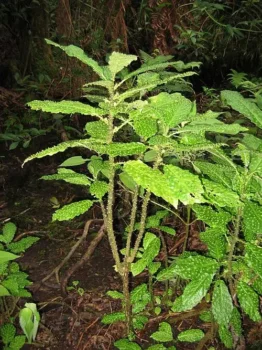
Puna Cyanea: Hawaii’s Critically Endangered Forest Jewel
Meet the puna cyanea (Cyanea platyphylla), one of Hawaii’s most remarkable yet heartbreakingly rare native plants. This extraordinary shrub represents both the incredible biodiversity of Hawaiian forests and the urgent conservation challenges facing island ecosystems today.
What Makes Puna Cyanea Special
The puna cyanea is a stunning perennial shrub that belongs to Hawaii’s unique bellflower family. With its broad, distinctively lobed leaves and striking appearance, this multi-stemmed woody plant typically grows 13 to 16 feet tall, creating an impressive presence in its native forest habitat. The plant produces tubular flowers that were once an important food source for native Hawaiian birds.
Where to Find This Rare Beauty
Puna cyanea is found exclusively in Hawaii, making it a true endemic treasure of the islands. This remarkable plant calls the high-elevation forests of the Big Island home, where it thrives in the cool, misty conditions of Hawaii’s unique mountain ecosystems.
- Species observed
- No observations
A Conservation Crisis
Here’s where the story becomes urgent: puna cyanea is critically imperiled with a Global Conservation Status of S1 and is listed as Endangered in the United States. This means there are typically five or fewer occurrences in the wild, with fewer than 1,000 individuals remaining. This plant is teetering on the edge of extinction.
Important: Due to its critically endangered status, puna cyanea should not be cultivated by home gardeners. Any conservation efforts should be left to professional botanists and conservation organizations with proper permits and expertise.
Growing Conditions in the Wild
In its native habitat, puna cyanea thrives in:
- Cool, moist high-elevation forest environments
- High humidity conditions
- Protection from strong winds
- Filtered sunlight through forest canopy
- Rich, well-draining forest soils
The Pollinator Connection
One of the most poignant aspects of puna cyanea’s story involves its relationship with Hawaii’s native birds. This plant evolved alongside native Hawaiian honeycreepers, which served as its primary pollinators. Sadly, many of these bird species are now extinct or critically endangered themselves, creating a conservation challenge that affects the entire ecosystem.
What You Can Do Instead
While you can’t (and shouldn’t) grow puna cyanea in your garden, you can still support Hawaiian native plant conservation:
- Support organizations working to protect Hawaiian native plants
- Plant other less-threatened Hawaiian natives if you live in suitable climates
- Visit botanical gardens with Hawaiian collections to learn more
- Advocate for habitat protection and restoration efforts
Hope for the Future
Despite its precarious situation, puna cyanea represents the resilience of Hawaiian ecosystems and the dedication of conservationists working to preserve these irreplaceable species. Professional botanists and conservation groups continue working to protect remaining populations and potentially establish new ones through carefully managed propagation programs.
The story of puna cyanea reminds us that some plants are simply too precious and rare for casual cultivation. Instead, we can appreciate their beauty from afar while supporting the critical work needed to ensure these remarkable species survive for future generations to discover and admire.