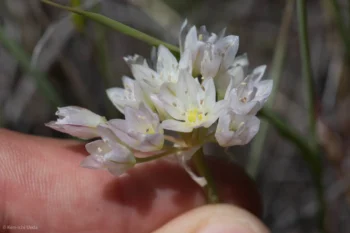
Purdy’s Fringed Onion: A Charming Native Bulb for California Gardens
If you’re looking to add some native charm to your California garden, let me introduce you to a delightful little bulb that deserves more attention: Purdy’s fringed onion (Allium fimbriatum var. purdyi). This petite perennial might not be the showiest plant in your garden, but it brings authentic California character and subtle beauty that native plant enthusiasts absolutely adore.
What Makes Purdy’s Fringed Onion Special?
This charming native onion is a true Californian, found naturally in the Sierra Nevada foothills and northern mountain regions of the Golden State. As a perennial forb, it returns year after year, producing clusters of delicate pink to white flowers that seem to dance above its grass-like foliage. The fringed part of its name refers to the delicately textured petals that give the blooms their distinctive appearance.
Botanically known as Allium fimbriatum var. purdyi, this plant has gone by several scientific names over the years, including Allium purdyi and Allium fimbriatum ssp. purdyi, but regardless of what you call it, it’s a treasure for native plant gardens.
Where Does It Grow?
Purdy’s fringed onion is endemic to California, making it a perfect choice for gardeners wanting to create authentic native landscapes. You’ll find it naturally occurring in the state’s mountainous regions, where it has adapted to the Mediterranean climate and well-draining soils.
- Species observed
- No observations
Why Plant Purdy’s Fringed Onion?
There are several compelling reasons to consider adding this native beauty to your garden:
- Pollinator magnet: The delicate flowers attract bees, butterflies, and other native pollinators, supporting local ecosystems
- Drought tolerance: Once established, it requires minimal water, perfect for California’s water-wise gardening needs
- Low maintenance: This little onion pretty much takes care of itself
- Authentic native appeal: Adds genuine California character to native plant gardens
- Rock garden star: Perfect scale and growing requirements for rock gardens and naturalistic plantings
A Word About Rarity
Before you rush out to plant this lovely native, it’s important to note that Purdy’s fringed onion has a conservation status that requires some attention. If you choose to grow this plant, please ensure you source it from reputable native plant nurseries that propagate their stock responsibly rather than collecting from wild populations. This helps protect the natural stands while still allowing you to enjoy this beautiful native in your garden.
Growing Purdy’s Fringed Onion Successfully
Ideal Growing Conditions
Like many California natives, Purdy’s fringed onion appreciates conditions that mimic its natural mountain habitat:
- Sunlight: Full sun to partial shade
- Soil: Well-draining soil is essential; it won’t tolerate soggy conditions
- Water: Drought-tolerant once established, but benefits from occasional deep watering during dry spells
- Climate: Thrives in USDA hardiness zones 7-9
Planting and Care Tips
Getting started with Purdy’s fringed onion is straightforward if you follow these guidelines:
- Planting time: Plant bulbs in fall for spring blooms
- Spacing: Allow adequate space for the grass-like foliage to spread naturally
- Watering: Water regularly during the first growing season, then reduce to occasional deep watering
- Maintenance: Allow foliage to die back naturally after blooming to nourish the bulb for next year’s display
- Fertilizing: Generally unnecessary; native soils provide adequate nutrition
Perfect Garden Companions
Purdy’s fringed onion plays well with other California natives and drought-tolerant plants. Consider pairing it with native grasses, manzanitas, or other bulbs that share similar growing requirements. In rock gardens, it creates beautiful naturalistic drifts when planted in small groups.
The Bottom Line
If you’re passionate about native plants and want to create an authentic California garden, Purdy’s fringed onion deserves serious consideration. Its subtle beauty, pollinator benefits, and low-maintenance nature make it a wonderful addition to the right garden setting. Just remember to source your plants responsibly, and you’ll be rewarded with years of delicate spring blooms and the satisfaction of supporting native California flora.
This little onion might not be the star of your garden show, but it’s definitely one of those supporting players that makes the whole production more authentic and ecologically valuable.