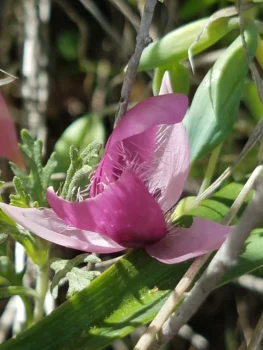
Purple Fairy-Lantern: A Rare California Native Bulb Worth Growing
If you’re looking to add a touch of woodland magic to your California native garden, the purple fairy-lantern (Calochortus amoenus) might just be the enchanting bulb you’ve been searching for. This delicate perennial forb produces charming bell-shaped flowers that dangle like tiny lanterns, bringing an ethereal quality to shaded garden spots.
What Makes Purple Fairy-Lantern Special
Purple fairy-lantern is a true California treasure, found naturally in the Sierra Nevada foothills and coastal mountain ranges. As a member of the lily family, this herbaceous perennial grows from a small bulb and produces slender stems topped with nodding, purple-pink flowers in late spring. The blooms have a distinctive lantern-like shape that gives this plant its whimsical common name.
Unlike many of its showier Calochortus cousins, purple fairy-lantern prefers the dappled light of woodland edges rather than full sun meadows. This makes it an excellent choice for gardeners looking to populate those tricky partial-shade areas with native plants.
Geographic Distribution and Native Status
Purple fairy-lantern is endemic to California, meaning it grows nowhere else in the world naturally. You’ll find wild populations scattered throughout the state’s foothill and montane regions, where it thrives in the Mediterranean climate of dry summers and moist winters.
- Species observed
- No observations
Why Consider Growing Purple Fairy-Lantern
This charming native offers several benefits for the thoughtful gardener:
- Supports local ecosystem health as a native species
- Attracts native bees and other small pollinators with its spring blooms
- Thrives in partial shade where many other natives struggle
- Low water requirements once established
- Unique aesthetic appeal with its dangling lantern flowers
- Fits beautifully into rock gardens, native plant gardens, and naturalized woodland areas
Important Conservation Considerations
Before you rush out to plant purple fairy-lantern, there’s something important to know: this species has a somewhat uncertain conservation status. While not critically endangered, it’s not as common as many other California natives. If you decide to grow this beautiful bulb, please ensure you source it responsibly from reputable native plant nurseries that propagate their own stock rather than wild-collecting.
Growing Conditions and Care
Purple fairy-lantern is well-suited for USDA hardiness zones 7-10, making it perfect for most of California and similar Mediterranean climates. Here’s what this woodland beauty needs to thrive:
- Light: Partial shade to dappled sunlight
- Soil: Well-draining soil is absolutely crucial – soggy conditions will rot the bulbs
- Water: Moderate water during the growing season (fall through spring), but allow to go completely dry during summer dormancy
- Climate: Mediterranean climate with dry summers
Planting and Care Tips
Success with purple fairy-lantern comes down to mimicking its natural habitat:
- Plant bulbs in fall, about 3-4 inches deep
- Choose a location with morning sun and afternoon shade
- Ensure excellent drainage – consider raised beds or slopes if your soil is heavy
- Water regularly during the growing season, but stop completely once foliage dies back
- Allow the plant to go dormant naturally in summer – don’t be tempted to keep watering
- Mulch lightly with leaf mold or pine needles to retain moisture during the growing season
- Be patient – bulbs may take a year or two to establish before blooming reliably
Is Purple Fairy-Lantern Right for Your Garden?
This lovely native is ideal for gardeners who appreciate subtle beauty and want to support California’s unique flora. It works wonderfully in:
- Native plant gardens
- Rock gardens with partial shade
- Woodland or forest gardens
- Mediterranean-style landscapes
- Bulb gardens featuring California natives
Keep in mind that purple fairy-lantern isn’t for everyone. If you’re looking for bold, showy flowers or year-round foliage, this might not be your plant. It’s also not suitable for areas with heavy clay soil, summer irrigation, or full shade.
The Bottom Line
Purple fairy-lantern offers a unique opportunity to grow a truly special California native that most gardeners will never see. With its delicate beauty, ecological benefits, and relatively modest care requirements, it can be a rewarding addition to the right garden. Just remember to source it responsibly and provide the well-draining, summer-dry conditions it craves. Your patience will be rewarded with those magical little lanterns dancing in the spring breeze.