Purple False Horkelia: A Rare California Native Worth Growing Responsibly
Meet purple false horkelia (Horkeliella purpurascens), a charming little perennial that’s as rare as it is beautiful. This delightful California native might not be the showiest plant in your garden, but it brings something special to the table: authentic local character and a story of resilience in tough mountain conditions.
What Makes Purple False Horkelia Special?
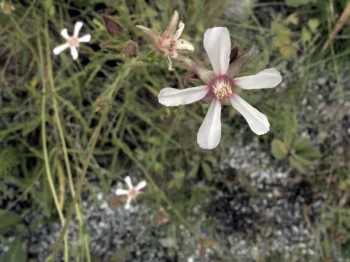
Purple false horkelia is a low-growing herbaceous perennial that belongs to the rose family. Don’t let the name fool you – while it’s called purple false horkelia, the flowers are actually white to pale pink, creating delicate clusters that seem to float above the foliage like tiny clouds. The purple likely refers to the reddish or purplish tinge the stems and leaves can develop, especially in cooler weather.
This little beauty forms compact mounds with distinctive palmate leaves (think marijuana-shaped, but much smaller and more delicate). It’s what botanists call a forb – essentially a non-woody perennial that dies back to ground level each winter and returns fresh each spring.
Where Does It Call Home?
Purple false horkelia is a true California endemic, meaning you won’t find it growing naturally anywhere else in the world. It makes its home in the Sierra Nevada mountains, where it has adapted to rocky, well-draining soils and the challenging conditions of higher elevations.
- Species observed
- No observations
A Word About Rarity
Here’s something important to know: purple false horkelia has a Global Conservation Status of S2?, which suggests it may be rare or uncommon. This means if you’re interested in growing this plant, you’ll want to source it responsibly. Look for nurseries that propagate their own plants rather than wild-collecting them. Better yet, consider starting from ethically sourced seeds if you can find them.
Why Grow Purple False Horkelia?
So why would you want this uncommon little plant in your garden? Here are some compelling reasons:
- Authentic California character: It’s a true local native that supports regional biodiversity
- Low maintenance: Once established, it’s incredibly drought-tolerant
- Pollinator friendly: Those small flowers attract native bees and other beneficial insects
- Perfect for challenging spots: Thrives in rocky, poor soils where other plants struggle
- Conversation starter: Its rarity makes it a unique addition to any native plant collection
Where Does It Fit in Your Garden?
Purple false horkelia isn’t going to anchor your landscape design, but it excels in supporting roles. Think of it as the perfect plant for:
- Rock gardens and alpine collections
- Native California plant gardens
- Difficult, dry slopes where nothing else wants to grow
- Crevices between stones or in retaining walls
- Front-of-border plantings in drought-tolerant gardens
Growing Purple False Horkelia Successfully
The good news is that purple false horkelia isn’t particularly fussy – it just has a few non-negotiable requirements:
Drainage is everything: This plant absolutely must have excellent drainage. If your soil holds water, you’ll need to amend it heavily with gravel, sand, or pumice, or plant it in raised beds or rock gardens.
Sun exposure: Full sun to partial shade works best. In hotter inland areas, some afternoon shade can be beneficial.
Water needs: Once established, this plant is remarkably drought-tolerant. In fact, too much water can be its downfall. Water occasionally during the first year to help it establish, then back off significantly.
Hardiness: Suitable for USDA zones 6-9, which covers most of California’s mountain and foothill regions.
Planting and Care Tips
- Plant in fall for best establishment before summer heat
- Space plants about 12 inches apart – they’ll form small colonies over time
- Mulch lightly with gravel rather than organic mulch
- Avoid fertilizing – these plants are adapted to poor soils
- Cut back old foliage in late winter before new growth appears
The Bottom Line
Purple false horkelia might not be the easiest plant to find, but it’s worth the effort if you’re creating an authentic California native garden. Its understated beauty, drought tolerance, and ecological value make it a wonderful addition for the right gardener in the right spot. Just remember to source it responsibly and give it the excellent drainage it craves.
This little mountain native proves that sometimes the most rewarding plants are the ones that whisper rather than shout – and purple false horkelia has some pretty interesting stories to tell about life in California’s high country.