Purple Fringeless Orchid: A Rare Native Beauty Worth Protecting
Meet the purple fringeless orchid (Platanthera peramoena), one of North America’s most enchanting yet elusive native wildflowers. This stunning perennial orchid might just change how you think about native plant conservation – though you’ll probably want to admire it from afar rather than try growing it in your backyard.
What Makes This Orchid Special
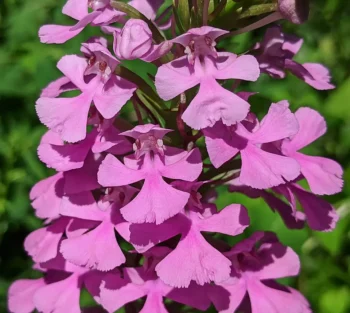
The purple fringeless orchid lives up to its name with gorgeous purple-pink flowers arranged in dense, eye-catching spikes that can reach up to 8 inches tall. Unlike its fringed relatives, this orchid’s flowers have smooth-edged petals with a distinctive hood-like upper petal and a prominent spur extending from the back. When it blooms in mid to late summer, it creates quite the spectacle in its wetland homes.
This native forb – that’s botanist-speak for a non-woody flowering plant – is a true perennial that returns year after year, assuming its very specific needs are met. You might also see it listed under its scientific synonyms like Habenaria peramoena or Blephariglotis peramoena in older field guides.
Where to Find Purple Fringeless Orchid
This orchid calls the eastern United States home, with populations scattered across 19 states from the Mid-Atlantic down to the Gulf Coast and west into the Midwest. You can find it growing naturally in Alabama, Arkansas, Delaware, Washington D.C., Georgia, Illinois, Indiana, Kentucky, Maryland, Mississippi, Missouri, New Jersey, North Carolina, Ohio, Pennsylvania, South Carolina, Tennessee, Virginia, and West Virginia.
- Species observed
- No observations
A Conservation Concern
Here’s where things get serious: the purple fringeless orchid is becoming increasingly rare across much of its range. It’s listed as endangered in New Jersey and holds critically low population rankings (S1 or S2) in Alabama and Arkansas. This rarity status means we need to be extra thoughtful about how we interact with this species.
Important: If you’re lucky enough to spot one of these orchids in the wild, please observe and photograph only. Never dig up or disturb wild orchids, as they depend on complex relationships with soil fungi that are nearly impossible to replicate in garden settings.
Habitat Preferences
Purple fringeless orchids are wetland specialists, earning a Facultative Wetland status across all regions where they grow. This means they usually hang out in wet places but occasionally pop up in merely moist spots. Think wet prairies, marsh edges, boggy meadows, and other areas where the soil stays consistently damp to soggy.
These orchids prefer full sun to partial shade and thrive in the consistently moist conditions that many garden plants would find challenging.
Supporting Pollinators
When purple fringeless orchids do bloom, they’re pollinator magnets. Their showy flowers attract butterflies, moths, and other long-tongued insects that can reach the nectar stored in those distinctive spurs. By protecting existing populations and their wetland habitats, we’re also supporting these important native pollinators.
Why Not to Grow It (And What to Do Instead)
While you might be tempted to try growing this beauty, here’s the reality check: purple fringeless orchids are notoriously difficult to cultivate. They require specific soil fungi (mycorrhizae) to survive, very particular moisture conditions, and a delicate balance of nutrients that’s nearly impossible to replicate in typical garden settings.
Instead of attempting to grow purple fringeless orchids, consider these native alternatives that offer similar aesthetic appeal and are much more garden-friendly:
- Wild bergamot (Monarda fistulosa) for purple blooms and pollinator appeal
- Purple coneflower (Echinacea purpurea) for sturdy, long-lasting purple flowers
- Swamp milkweed (Asclepias incarnata) for wetland areas with pink-purple blooms
- Blue flag iris (Iris versicolor) for wet spots with striking flowers
How You Can Help
The best way to grow purple fringeless orchids is to support habitat conservation efforts in your area. Consider:
- Volunteering with local native plant societies or conservation organizations
- Supporting wetland preservation initiatives
- Creating pollinator-friendly gardens with native plants that don’t require collection from the wild
- Reporting any wild sightings to local botanists or natural heritage programs
The purple fringeless orchid reminds us that sometimes the most beautiful native plants are best loved from a respectful distance. By protecting their wild habitats and choosing appropriate alternatives for our gardens, we can ensure future generations will have the chance to marvel at these remarkable orchids in their natural homes.