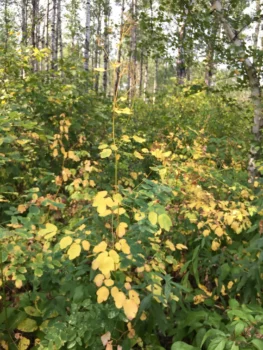
Purple Meadow-Rue: A Graceful Native Perennial for Your Garden
If you’re looking for a native perennial that brings both height and delicate beauty to your garden, purple meadow-rue (Thalictrum dasycarpum) might just be your new favorite plant. This graceful North American native offers an ethereal quality that’s hard to match, with its feathery foliage and cloud-like flower clusters that dance in the breeze.
What Makes Purple Meadow-Rue Special?
Purple meadow-rue is a perennial forb that lacks significant woody tissue, making it a true herbaceous plant. Don’t let the purple in its name fool you entirely – while the flowers do have purple-tinted stamens and pistils, the overall effect is more of a soft, silvery-purple haze. The real magic lies in its compound, blue-green leaves that create a fine, almost fern-like texture throughout the growing season.
This impressive plant can reach heights of 3-8 feet, making it an excellent choice for adding vertical interest to your landscape without the commitment of shrubs or trees.
Where Purple Meadow-Rue Calls Home
As a true North American native, purple meadow-rue has one of the most extensive natural ranges you’ll find. It grows naturally across Canada in Alberta, British Columbia, Manitoba, Ontario, Quebec, Saskatchewan, and Yukon. In the United States, you can find it thriving in Alabama, Arizona, Arkansas, Colorado, Idaho, Illinois, Indiana, Iowa, Kansas, Kentucky, Louisiana, Michigan, Minnesota, Mississippi, Missouri, Montana, Nebraska, New Mexico, New York, North Dakota, Ohio, Oklahoma, Pennsylvania, South Dakota, Tennessee, Texas, Utah, Washington, Wisconsin, and Wyoming.
- Species observed
- No observations
Garden Design and Landscape Role
Purple meadow-rue shines in several garden settings:
- Prairie and wildflower gardens: Perfect for recreating natural grassland ecosystems
- Rain gardens: Its wetland tolerance makes it ideal for managing water runoff
- Naturalized areas: Excellent for low-maintenance, natural-looking landscapes
- Background plantings: Provides a soft, textural backdrop for shorter perennials
- Native plant gardens: A must-have for authentic regional plantings
Growing Conditions and Care
One of the best things about purple meadow-rue is its adaptability. This plant is quite forgiving and can thrive in USDA hardiness zones 3-8, making it suitable for most of the continental United States and southern Canada.
Moisture Requirements: Purple meadow-rue has a facultative to facultative wetland status across most regions, meaning it usually prefers moist conditions but can tolerate some variation. It’s particularly happy in consistently moist soils but won’t sulk if things dry out occasionally.
Light Needs: This flexible plant performs well in both full sun and partial shade, though it may appreciate some afternoon shade in hotter climates.
Soil Preferences: Rich, organic soils are ideal, but purple meadow-rue is quite adaptable to various soil types as long as they don’t stay bone dry for extended periods.
Planting and Maintenance Tips
Getting purple meadow-rue established in your garden is refreshingly straightforward:
- Planting time: Spring or fall are ideal planting seasons
- Spacing: Allow 2-3 feet between plants to accommodate their mature spread
- Propagation: Easily grown from seed and will often self-sow in suitable conditions
- Support: In windy locations, taller specimens may benefit from staking
- Maintenance: Once established, this is largely a plant it and forget it perennial
Wildlife and Pollinator Benefits
While purple meadow-rue may seem delicate, it plays an important role in supporting local ecosystems. The flowers provide pollen for various small insects and bees, contributing to the complex web of pollinator relationships in native plant communities. As a wind-pollinated plant, it also supports broader ecosystem functions beyond just direct pollinator relationships.
Is Purple Meadow-Rue Right for Your Garden?
Purple meadow-rue is an excellent choice if you:
- Want to support native ecosystems with authentic regional plants
- Need a tall, graceful perennial for background plantings
- Have moist to wet areas that need attractive plantings
- Appreciate subtle, naturalistic beauty over bold, showy displays
- Prefer low-maintenance perennials that can largely care for themselves
However, you might want to consider alternatives if you:
- Need plants for very dry, drought-prone locations
- Prefer compact plants under 3 feet tall
- Want bold, colorful flowers rather than subtle, airy blooms
Purple meadow-rue brings a special kind of quiet elegance to the garden – the kind that grows on you over time rather than shouting for attention. For gardeners interested in creating authentic native landscapes with plants that truly belong in their region, this graceful perennial is definitely worth considering. Its combination of easy care, impressive height, and delicate beauty makes it a valuable addition to any native plant enthusiast’s garden.