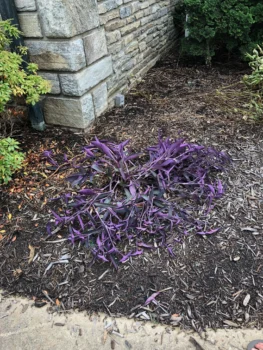
Purple Queen: A Colorful Ground Cover for Southern Gardens
Looking for a low-maintenance plant that adds a pop of purple to your garden? Meet Purple Queen (Tradescantia pallida), a trailing perennial that’s been winning over gardeners with its distinctive purple-tinged foliage and delicate pink flowers. While it might not be the most well-known native plant, this southeastern beauty has some interesting qualities worth considering for your landscape.
What Is Purple Queen?
Purple Queen is a herbaceous perennial that belongs to the spiderwort family. You might also see it listed under its former scientific name, Setcreasea purpurea, in older gardening references. This low-growing plant creates a spreading mat of succulent-like stems and leaves, making it an excellent choice for ground cover applications.
The plant’s most striking feature is its purple-flushed foliage, which intensifies in bright sunlight. Small three-petaled flowers in shades of pink to purple appear sporadically throughout the growing season, adding an extra touch of charm to this already colorful plant.
Where Purple Queen Calls Home
Purple Queen is native to the southeastern United States, with natural populations found in Florida, Louisiana, and Texas. Interestingly, while it’s native to these mainland states, it has also established itself as a non-native species in Puerto Rico and the U.S. Virgin Islands, where it reproduces freely in the wild.
- Species observed
- No observations
Growing Conditions and Care
One of Purple Queen’s biggest selling points is its easygoing nature. This plant thrives in USDA hardiness zones 7-11, making it a reliable choice for southern and southwestern gardeners.
Light requirements: Purple Queen performs best in full sun to partial shade. More sunlight typically results in more intense purple coloration in the foliage.
Soil needs: Well-draining soil is essential. This plant is quite drought-tolerant once established and doesn’t appreciate soggy conditions. It has a facultative wetland status, meaning it can handle occasional moisture but doesn’t require it.
Maintenance: This is truly a plant it and forget it kind of perennial. Purple Queen requires minimal care once established and can handle periods of neglect quite well.
Design Ideas and Garden Uses
Purple Queen’s trailing habit makes it incredibly versatile in the landscape:
- Ground cover for slopes or difficult areas
- Spillover plant in containers and hanging baskets
- Border edging for informal garden beds
- Accent plant in rock gardens or xeriscapes
- Colorful addition to Mediterranean-style landscapes
The plant’s low-growing, spreading nature (typically reaching 6-12 inches tall and spreading 12-18 inches wide) makes it perfect for filling in gaps between larger plants or creating colorful drifts in informal garden settings.
Wildlife and Pollinator Benefits
While Purple Queen may not be a powerhouse pollinator plant, its small flowers do provide nectar for bees and butterflies. The plant’s dense growth habit can also offer some shelter for small beneficial insects.
Things to Consider
Before adding Purple Queen to your garden, here are a few things to keep in mind:
Spreading tendency: This plant can spread quite readily, especially in ideal growing conditions. While this makes it excellent for ground cover, you may need to manage its spread in smaller gardens.
Regional considerations: Since Purple Queen has established itself as non-native in some areas, check with your local extension office about its behavior in your specific region.
Native alternatives: If you’re focusing on native plants, consider other southeastern natives like Wild Ginger (Asarum canadense) for shaded areas or native sedums for sunny spots with similar growing conditions.
Planting and Propagation
Purple Queen is remarkably easy to propagate. Stem cuttings root readily in water or moist soil, making it simple to expand your plantings or share with friends. The plant can also spread naturally through its trailing stems, which may root at the nodes when they touch the ground.
When planting, space specimens 12-18 inches apart to allow for their spreading habit. Water regularly during the first few weeks to help establish the root system, then reduce watering frequency as the plant becomes drought-tolerant.
The Bottom Line
Purple Queen offers an appealing combination of colorful foliage, easy care, and versatile garden applications. While it may not be the most ecologically impactful native plant choice, it’s a solid performer for gardeners seeking low-maintenance color in challenging spots. Just keep an eye on its spreading habit and consider incorporating other native plants to create a well-rounded, wildlife-friendly landscape.
Whether you’re dealing with a difficult slope, want to add color to containers, or simply appreciate plants that take care of themselves, Purple Queen might just earn a spot in your garden. Its purple personality certainly makes it hard to ignore!