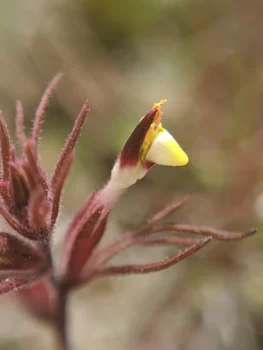
Purplebeak Owl’s-Clover: A Charming California Native Worth Discovering
If you’re looking to add a splash of delicate color to your California native garden, purplebeak owl’s-clover (Triphysaria micrantha) might just be the perfect wildflower you’ve never heard of. This petite annual brings subtle beauty and ecological value to naturalized landscapes across the Golden State.
What Makes Purplebeak Owl’s-Clover Special?
Purplebeak owl’s-clover is a true California native, belonging to a group of plants that have evolved specifically within our Mediterranean climate. As an annual forb, it completes its entire life cycle in one growing season, creating carpets of small, tubular flowers that range from purple to pink. The beak in its name refers to the distinctive pointed shape of its flower clusters, while owl’s-clover is a nod to its relationship with other members of the Orobanchaceae family.
You might also encounter this plant under its former scientific names, including Orthocarpus micranthus, as botanical classifications have evolved over time.
Where Does It Grow?
This California endemic is found throughout the state, from coastal ranges to inland foothills. It thrives in the mediterranean climate zones that make California’s flora so unique.
- Species observed
- No observations
A Word of Caution: Rarity Matters
Before you rush to add purplebeak owl’s-clover to your garden, there’s something important to know. This species has a conservation status of S3?, indicating that its population status is somewhat uncertain but potentially vulnerable. If you’re interested in growing this native beauty, it’s crucial to source seeds or plants only from reputable native plant nurseries that practice responsible collection methods. Never collect from wild populations.
Garden Design and Landscape Role
Purplebeak owl’s-clover shines in:
- Native wildflower meadows
- Naturalized garden areas
- Restoration projects
- Mixed native annual displays
- Pollinator gardens focused on California natives
This isn’t a plant for formal borders or high-maintenance landscapes. Instead, think of it as part of a community of native annuals that create seasonal interest and support local ecosystems.
Growing Conditions and Care
Like many California natives, purplebeak owl’s-clover prefers:
- Sunlight: Full sun to partial shade
- Soil: Well-draining soils; avoid heavy clay or constantly wet conditions
- Water: Moderate water during establishment, then drought-tolerant
- Climate zones: USDA zones 8-10, matching California’s mediterranean climate
Planting and Care Tips
Since this is an annual, growing purplebeak owl’s-clover is all about timing and patience:
- Sowing: Direct seed in fall (October-December) to allow natural winter stratification
- Soil prep: Minimal soil amendment needed; natives often prefer lean soils
- Watering: Water gently during germination, then reduce as plants establish
- Maintenance: Very low maintenance once established; allow plants to self-seed for following years
Benefits for Pollinators and Wildlife
While small in stature, purplebeak owl’s-clover punches above its weight in terms of ecological value. The tubular flowers attract native bees, including smaller specialist species that co-evolved with California’s native flora. By including this plant in your garden, you’re supporting the intricate web of relationships that make California’s ecosystems so special.
Is Purplebeak Owl’s-Clover Right for Your Garden?
Consider this native annual if you:
- Want to support California’s native plant communities
- Enjoy naturalized, meadow-style gardens
- Are committed to responsible sourcing practices
- Appreciate subtle, delicate flowers over showy displays
- Want to attract native pollinators
However, this might not be the best choice if you prefer highly controlled, formal gardens or need guaranteed availability, given its conservation status.
The Bottom Line
Purplebeak owl’s-clover represents the quiet beauty of California’s native flora. While it may not be the showiest plant in your garden, it offers the deep satisfaction of growing something truly connected to your local ecosystem. Just remember to source responsibly and think of yourself as a steward of this special California native.
By choosing native plants like purplebeak owl’s-clover, you’re not just gardening—you’re participating in the preservation of California’s unique natural heritage, one small purple flower at a time.