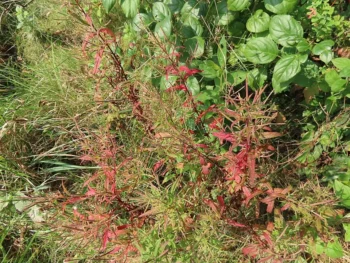
Purpleleaf Willowherb: A Native Wetland Beauty for Your Garden
If you’re looking to add a splash of color to those soggy spots in your yard, meet purpleleaf willowherb (Epilobium coloratum) – a charming native perennial that absolutely loves getting its feet wet. This unassuming wildflower might not win any popularity contests, but it’s got some serious staying power and ecological street cred that make it worth considering for the right garden situation.
What Makes Purpleleaf Willowherb Special?
Purpleleaf willowherb is a true North American native, naturally occurring across an impressive range from Canada down through most of the United States. This herbaceous perennial belongs to the evening primrose family and typically grows as a single-stemmed plant reaching about 3.3 feet tall at maturity.
The plant produces small but conspicuous red to pink flowers during summer, creating a lovely display against its green foliage. While individual blooms might be modest in size, they appear in clusters that catch the eye and provide valuable nectar for pollinators.
Where Does It Grow Naturally?
This adaptable native has quite the geographical footprint, growing naturally in states from Alabama to Wisconsin, and north into Canadian provinces including New Brunswick, Nova Scotia, Ontario, Quebec, and Newfoundland. It’s also found in Washington D.C. and nearly everywhere in between – a testament to its adaptability within its preferred wetland habitats.
- Species observed
- No observations
However, gardeners in Arkansas should take note: purpleleaf willowherb has a rarity status of S1 in that state, meaning it’s quite uncommon there. If you’re in Arkansas and want to grow this plant, make sure to source it responsibly from reputable native plant nurseries rather than collecting from wild populations.
The Wetland Specialist
Here’s where purpleleaf willowherb gets really specific about its needs – it’s what botanists call an obligate wetland plant in most regions. This means it almost always occurs in wetlands and has a high moisture requirement. In the Eastern Mountains and Piedmont region, it’s classified as facultative wetland, meaning it usually prefers wet conditions but can occasionally tolerate drier spots.
This wetland preference isn’t a limitation – it’s actually a superpower for gardeners dealing with chronically moist or soggy areas where many other plants struggle.
Growing Conditions and Care
Purpleleaf willowherb is refreshingly straightforward about its needs, though they’re quite specific:
- Soil: Adapts well to fine and medium-textured soils, but skip the sandy stuff
- Moisture: High water needs – think consistently moist to wet conditions
- pH: Flexible range from 4.5 to 7.5 (slightly acidic to neutral)
- Light: Intermediate shade tolerance, so partial sun to partial shade works well
- Temperature: Hardy to -33°F, suitable for USDA zones 3-9
- Drainage: High anaerobic tolerance means it can handle poorly drained, waterlogged soils
The plant has a moderate growth rate and will actively grow during spring, reaching its full height of about 3.3 feet by summer when it begins blooming.
Perfect Garden Situations
Purpleleaf willowherb shines in specific landscape applications:
- Rain gardens: Excellent for managing stormwater runoff
- Pond margins: Natural-looking edges around water features
- Bog gardens: Thrives in these specialized wet garden areas
- Naturalized wetland areas: Perfect for restoring or creating wildlife habitat
- Problem wet spots: Turn that soggy area into a feature, not a frustration
Planting and Propagation
Growing purpleleaf willowherb from seed is your best bet, as this plant doesn’t propagate well through other methods like cuttings or division. The good news? Seeds are abundant, with about 3 million seeds per pound (though you won’t need nearly that many!).
Seeds are typically available through native plant suppliers and don’t require cold stratification. Plant in consistently moist soil in spring, and be patient – seedling vigor is medium, so don’t expect instant gratification. The plant has a moderate lifespan and will reseed itself slowly under the right conditions.
Wildlife and Pollinator Benefits
While the specific wildlife benefits aren’t fully documented, purpleleaf willowherb’s summer blooms provide nectar for various pollinators including native bees, butterflies, and other beneficial insects. As a native plant, it’s likely to support specialized relationships with local wildlife that non-native plants simply can’t match.
Is Purpleleaf Willowherb Right for Your Garden?
This plant is ideal if you:
- Have consistently moist to wet soil conditions
- Want to support native pollinators and wildlife
- Need plants for rain gardens or bioswales
- Prefer low-maintenance perennials once established
- Value ecological function alongside beauty
However, purpleleaf willowherb might not be the best choice if you have dry soil conditions, need instant impact, or prefer showy, large flowers. Its beauty is subtle and its requirements quite specific.
For gardeners blessed with naturally wet conditions or those creating rain gardens and wetland features, purpleleaf willowherb offers an authentic way to work with your site’s natural conditions while supporting local ecosystems. Sometimes the most rewarding plants are the ones that teach us to appreciate what nature provides, soggy spots and all.