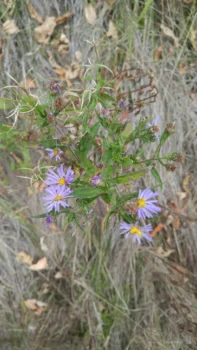
Purplestem Aster: A Towering Fall Beauty for Your Native Garden
If you’re looking for a native perennial that brings spectacular late-season color and supports pollinators when most other flowers have called it quits, meet the purplestem aster (Symphyotrichum puniceum var. puniceum). This impressive North American native might just be the tall, blue-flowered showstopper your garden has been waiting for.
What Makes Purplestem Aster Special?
Purplestem aster is a true native success story, naturally occurring across an impressive range from Canada down through much of the eastern and central United States. You’ll find this adaptable perennial thriving from Alberta to South Carolina, and from the Atlantic coast all the way to the Great Plains.
- Species observed
- No observations
This herbaceous perennial can reach an impressive 8.1 feet tall, making it a natural choice for the back of borders or as a dramatic focal point in naturalized areas. Despite its height, it maintains an elegant, erect growth form that won’t flop over and disappoint you come blooming time.
A Fall Festival of Blue Blooms
The real magic happens in fall when purplestem aster bursts into bloom with conspicuous blue flowers that practically glow against the autumn landscape. While the individual flowers might not be the showiest up close, the overall effect is breathtaking—especially when you consider that most gardens are winding down for the year.
The green foliage provides a nice backdrop throughout the growing season, and the plant maintains its attractive appearance from spring through its fall flowering finale. Just don’t expect it to hold onto its leaves through winter—this deciduous perennial knows when to call it a year.
Perfect Spots for Purplestem Aster
This moisture-loving native is practically begging to be planted in:
- Rain gardens and bioswales
- Native plant gardens
- Naturalized meadow areas
- Pond or stream margins
- Low-lying areas that stay consistently moist
With its high moisture requirements and intolerance for drought, purplestem aster isn’t the plant for that sunny, dry hillside. Instead, think of it as nature’s solution for those perpetually damp spots where other perennials might struggle.
Growing Conditions That Make It Happy
Success with purplestem aster comes down to understanding its preferences:
- Moisture: High water needs—think consistently moist to wet soil
- Soil: Adapts well to fine and medium-textured soils, but skip the sandy spots
- pH: Flexible range from 4.5 to 7.5
- Sun: Full sun is essential—this plant is shade intolerant
- Hardiness: Cold hardy to -35°F, suitable for zones 3-8
One thing to keep in mind: this is a slow-growing plant with a moderate lifespan. Don’t expect instant gratification, but do expect years of reliable performance once established.
Planting and Care Tips
Getting started with purplestem aster is surprisingly straightforward:
- Propagation: Grow from seed (700,000 seeds per pound!), bare root plants, or sprigs
- Planting density: Space plants for 2,700 to 11,000 per acre depending on your goals
- Timing: Seeds need 90 frost-free days minimum
- Patience required: Slow growth rate and slow vegetative spread
- Fertilization: Medium fertility requirements—not a heavy feeder
The plant spreads by rhizomes, but don’t worry about it taking over your garden anytime soon. Its slow spread rate means you’ll have plenty of time to enjoy it without constant management.
Wildlife and Pollinator Benefits
Fall-blooming natives like purplestem aster are absolute heroes for late-season pollinators. When most flowers have finished for the year, these blue blooms provide crucial nectar for migrating butterflies, native bees, and other beneficial insects preparing for winter.
A Few Things to Consider
While purplestem aster is generally a well-behaved garden citizen, there are a few considerations:
- It’s listed as rare in New Jersey (SX.1 status), so if you’re in the Garden State, source your plants responsibly
- No drought tolerance means consistent watering in dry spells
- Takes time to establish and show its full potential
- Needs full sun—won’t perform in even partial shade
The Bottom Line
Purplestem aster might not be the flashiest plant in the native garden catalog, but it’s exactly the kind of reliable, beneficial native that forms the backbone of sustainable landscaping. If you have a sunny, moist spot that could use some late-season interest and pollinator support, this towering fall beauty deserves serious consideration.
Just remember: good things come to those who wait, and purplestem aster rewards patient gardeners with years of dependable autumn color and wildlife value.