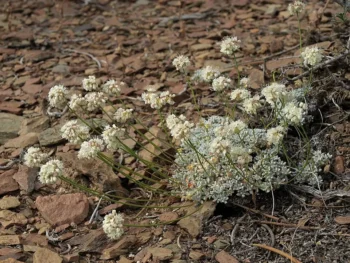
Purpus’ Buckwheat: A Desert Gem for Water-Wise Gardens
If you’re looking for a low-maintenance native plant that can handle serious drought while still putting on a beautiful show, let me introduce you to Purpus’ buckwheat (Eriogonum purpusii). This unassuming little perennial might not win any height contests, but it’s got personality in spades and benefits that’ll make both you and your local pollinators happy.
What Is Purpus’ Buckwheat?
Purpus’ buckwheat is a native perennial forb that belongs to the wild buckwheat family. Don’t let the buckwheat name fool you – this isn’t related to the pancake flour variety! Instead, it’s a hardy desert dweller that forms attractive low mats of foliage topped with delicate clusters of small flowers that range from white to soft pink.
This plant is a true American native, naturally occurring in the southwestern United States. You can find it growing wild in California and Nevada, where it has adapted beautifully to harsh desert and chaparral conditions.
- Species observed
- No observations
Why Your Garden Needs This Desert Beauty
There are plenty of reasons to fall in love with Purpus’ buckwheat:
- Drought superstar: Once established, this plant can survive on minimal water – perfect for xeriscaping or areas where you want gorgeous plants without the guilt of high water usage
- Pollinator magnet: The small but numerous flowers attract native bees, butterflies, and other beneficial insects throughout the blooming season
- Low maintenance: This isn’t a plant that demands constant attention – it actually prefers benign neglect
- Year-round interest: As a perennial, it provides structure and interest even when not in bloom
- Native plant benefits: Supporting local ecosystems by choosing plants that evolved in your region
Perfect Spots for Purpus’ Buckwheat
This versatile little plant shines in several garden situations:
- Rock gardens: Its compact, mat-forming habit makes it ideal for tucking between stones
- Xeriscape designs: A natural choice for water-wise landscaping
- Native plant gardens: Pairs beautifully with other California and Nevada natives
- Mediterranean-style landscapes: Complements the drought-tolerant aesthetic perfectly
- Ground cover: Great for covering slopes or areas where you want low, spreading coverage
Growing Purpus’ Buckwheat Successfully
The good news? This plant wants to succeed almost as much as you want it to! Here’s how to give it the best start:
Location and Soil
Choose a spot with full sun – Purpus’ buckwheat loves basking in bright light. The soil should drain well; this plant absolutely cannot tolerate soggy conditions. Sandy, rocky, or gravelly soil is perfect. If your soil holds water, consider creating a raised bed or mound to improve drainage.
Climate Considerations
This plant thrives in USDA hardiness zones 8-10, making it suitable for warmer climates. It’s adapted to hot, dry summers and mild winters – think Mediterranean or desert conditions.
Planting Tips
Fall is the ideal time to plant, as it gives the roots time to establish before the stress of summer heat. Space plants according to their mature spread, and resist the urge to amend the soil with rich compost – this desert native actually prefers lean conditions.
Watering and Care
Here’s where Purpus’ buckwheat really shines: it needs very little from you once established. Water regularly the first year to help roots get established, then gradually reduce watering. Mature plants typically need only occasional deep watering during extended dry periods.
Skip the fertilizer entirely – rich soil can actually make the plant leggy and less attractive. This is definitely a less is more situation!
A Word About Rarity
While Purpus’ buckwheat isn’t critically endangered, it does have a somewhat limited natural range. If you decide to add this beauty to your garden, make sure you’re purchasing from reputable native plant nurseries that source their plants responsibly rather than collecting from wild populations.
The Bottom Line
Purpus’ buckwheat might be small in stature, but it’s mighty in benefits. If you garden in zones 8-10 and want a beautiful, low-maintenance native plant that supports local wildlife while conserving water, this little gem deserves a spot in your landscape. Your pollinators will thank you, your water bill will thank you, and you’ll get to enjoy the quiet satisfaction of growing a plant that’s perfectly at home in its environment.