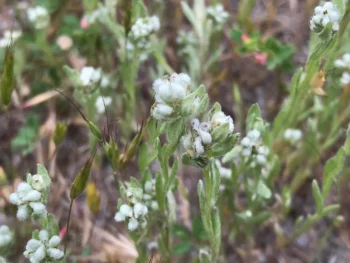
Q-tips Plant: A Tiny California Native Worth Knowing
Meet one of California’s most uniquely named native plants – the q-tips plant! While its quirky common name might make you think of cotton swabs, this tiny annual wildflower is actually a fascinating member of the sunflower family that deserves a spot in conversations about California’s diverse native flora.
What Exactly is the Q-tips Plant?
Scientifically known as Micropus californicus var. subvestitus, the q-tips plant is a small annual forb – essentially a non-woody herbaceous plant that completes its entire life cycle in one growing season. Don’t let its diminutive size fool you; this little native has been quietly thriving in California’s landscapes long before European settlement.
As a member of the Asteraceae (sunflower) family, it’s related to more familiar plants like daisies and sunflowers, though you’d be hard-pressed to see the family resemblance at first glance!
Where Does It Call Home?
This native gem is exclusively found in California, making it a true Golden State endemic variety. Its natural range is quite limited, which adds to its special character as a regional specialty plant.
- Species observed
- No observations
Should You Grow Q-tips Plant in Your Garden?
Here’s where things get interesting – and important. The q-tips plant has a conservation status that suggests it’s not exactly common in the wild. This means if you’re interested in growing this unique California native, you’ll want to be extra thoughtful about sourcing.
The Good Reasons to Consider It:
- It’s a true California native, supporting local ecosystem integrity
- Annual plants like this one can fill seasonal niches in native gardens
- Its rarity makes it a conversation starter for native plant enthusiasts
- Supporting cultivation of rare natives can help preserve genetic diversity
Important Considerations:
- Due to its conservation status, only seek plants or seeds from reputable native plant societies or ethical nurseries
- Never collect from wild populations
- Its small size means it’s not a showy garden centerpiece
- Limited availability makes it more of a specialty plant than a garden staple
Growing Conditions and Care
As a California native annual, the q-tips plant has evolved to thrive in the state’s Mediterranean climate patterns. While specific growing information for this variety is limited, related species typically prefer:
- Well-draining soils – think sandy or gravelly conditions
- Full sun to partial shade
- Minimal summer water once established
- Natural rainfall patterns or winter watering
Since it’s an annual, you’ll be working with seeds rather than transplants. The plant will complete its entire life cycle in one season, setting seed for the following year if conditions are right.
The Bottom Line
The q-tips plant represents something special in California’s native flora – a small but significant piece of the state’s botanical heritage. While it’s not going to transform your landscape with bold colors or dramatic foliage, it offers something perhaps more valuable: a connection to California’s unique ecological identity.
If you’re a dedicated native plant enthusiast looking to support conservation through cultivation, and you can source seeds or plants responsibly, the q-tips plant could be a meaningful addition to a specialized native garden. Just remember that with rare plants comes responsibility – always prioritize ethical sourcing and consider this more of a conservation effort than a typical gardening project.
For most gardeners, exploring more common California natives might be a better starting point, but for those ready to take on the challenge of growing something truly special, the q-tips plant awaits!