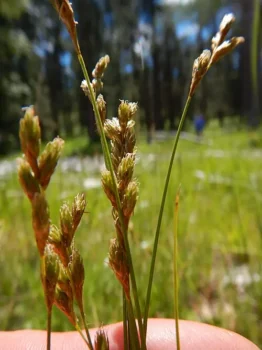
Quill Sedge: A Quietly Beautiful Native for Wet Spots and Shady Gardens
If you’re looking for a native grass-like plant that thrives in those tricky wet spots where other plants struggle, quill sedge (Carex tenera) might be exactly what your garden needs. This unassuming perennial sedge has been quietly beautifying North American landscapes for centuries, and it’s time more gardeners discovered its subtle charms.
What Makes Quill Sedge Special?
Don’t let the name fool you – quill sedge isn’t actually a grass, though it certainly looks like one. It’s a true sedge, part of the Cyperaceae family, with that characteristic grass-like appearance that makes it perfect for naturalistic plantings. This native beauty grows in neat clumps (called bunches in botanical speak) and reaches a mature height of about 2.5 feet, creating lovely textural interest without overwhelming smaller plants nearby.
The plant’s fine-textured green foliage has a delicate, almost feathery appearance that adds movement and softness to garden compositions. While it may not win any awards for flashy flowers – the small green blooms are quite modest – its understated elegance more than makes up for it.
Where Quill Sedge Calls Home
Quill sedge is impressively widespread across North America, naturally occurring in an extensive range that includes most of Canada and the lower 48 states. You’ll find it thriving from Alberta to Nova Scotia in Canada, and from Washington state all the way to Georgia and Maine in the United States. This broad native range means there’s a good chance it’s perfectly suited to your local growing conditions.
- Species observed
- No observations
A Word of Caution: Rarity Considerations
While quill sedge has a wide distribution, it’s worth noting that this plant has become quite rare in some areas. In New Jersey, for example, it’s listed as S2 status, meaning it’s considered imperiled in that state. If you live in an area where quill sedge is uncommon, please source your plants responsibly from reputable native plant nurseries rather than collecting from wild populations.
Perfect Garden Roles for Quill Sedge
This versatile sedge excels in several garden situations:
- Rain gardens and bioswales – Its preference for consistent moisture makes it ideal for managing stormwater
- Wetland restoration projects – Helps stabilize soil and provides habitat
- Shade gardens – Tolerates shade better than many grass-like plants
- Native plant gardens – Adds authentic local character
- Naturalistic landscapes – Creates soft, meadow-like textures
Growing Conditions: What Quill Sedge Loves
The good news is that quill sedge isn’t particularly fussy, though it does have some preferences:
Moisture: This is where quill sedge really shines. It’s classified as facultative wetland in most regions, meaning it usually prefers wet conditions but can adapt to drier spots if needed. Think of it as your go-to plant for those soggy areas where other plants sulk.
Soil: Adaptable to medium and fine-textured soils, with a preference for slightly acidic to neutral conditions (pH 4.9-7.0). It’s not picky about fertility levels – medium fertility suits it just fine.
Light: Here’s where quill sedge really stands out from typical grasses – it’s genuinely shade tolerant! While it can handle full sun in consistently moist conditions, it’s one of the few grass-like plants that actually thrives in partial shade.
Hardiness: Extremely cold hardy (surviving temperatures down to -33°F), making it suitable for USDA zones 3-9.
Planting and Care Tips
Getting quill sedge established requires a bit of patience, as this is definitely a slow and steady wins the race kind of plant:
Planting: You can start quill sedge from seed, bare root plants, or sprigs. Spring planting works best, giving the slow-growing roots time to establish before winter.
Spacing: Plan for about 2,700-4,800 plants per acre if you’re doing a large restoration project, or space individual plants about 12-18 inches apart in garden settings.
Establishment: Keep soil consistently moist during the first growing season. The plant has a slow growth rate and low seedling vigor, so don’t expect instant gratification.
Maintenance: Once established, quill sedge is refreshingly low-maintenance. It doesn’t require fertilization and actually prefers not to be pampered. You can cut it back in late winter if desired, though it’s not necessary.
Wildlife and Ecosystem Benefits
While specific wildlife benefits for quill sedge aren’t well-documented, sedges as a group provide important ecosystem services. They offer habitat for various insects and small wildlife, help prevent soil erosion, and contribute to the overall biodiversity of native plant communities.
Should You Plant Quill Sedge?
If you have wet or consistently moist areas in your landscape, especially in partial shade, quill sedge could be an excellent choice. It’s particularly valuable for gardeners interested in native plants, sustainable landscaping, or managing challenging wet spots naturally.
Just remember that this isn’t a plant for impatient gardeners – its slow growth means you’ll need to be patient as it establishes. But for those willing to wait, quill sedge rewards you with a reliable, low-maintenance native that quietly does its job year after year.
And if you’re in an area where it’s become rare, consider yourself a conservation hero for giving this humble sedge a place to call home once again.