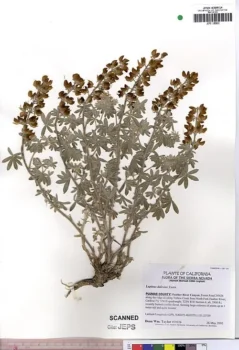
Quincy Lupine: A Rare California Native Worth Protecting in Your Garden
If you’re passionate about California native plants and love the idea of growing something truly special, let me introduce you to the Quincy lupine (Lupinus dalesiae). This stunning perennial lupine is one of California’s botanical treasures – and yes, it’s as lovely as it sounds, even if it’s not the easiest plant to find at your local nursery.
What Makes Quincy Lupine Special?
The Quincy lupine is a true California native, found exclusively in the Golden State. This perennial forb – essentially a non-woody flowering plant – produces the classic lupine flower spikes that gardeners adore, with beautiful purple-blue blooms rising above distinctive palmate leaves that look like nature’s own hand fans.
What sets this lupine apart isn’t just its beauty, but its story. With a global conservation status of S3 (Vulnerable), the Quincy lupine is considered at risk due to its limited range and relatively small population. This makes it both a conservation priority and a special addition to the right garden.
Where Does Quincy Lupine Grow?
This lupine calls California home, specifically thriving in the Sierra Nevada region. Its limited geographical distribution is part of what makes it so special – and so vulnerable.
- Species observed
- No observations
Should You Plant Quincy Lupine?
Here’s where I need to be straight with you: if you’re drawn to this beautiful native, you absolutely should consider growing it, but with an important caveat. Due to its vulnerable status, it’s crucial that you source seeds or plants responsibly. This means:
- Only purchase from reputable native plant nurseries
- Ensure the plants come from ethical propagation, not wild collection
- Consider participating in seed collection programs with local conservation groups
- Never collect seeds or plants from wild populations
Garden Design and Landscape Role
Quincy lupine shines in native California gardens and wildflower meadows. As a member of the legume family, it’s a nitrogen-fixer, which means it actually improves soil health for neighboring plants – talk about being a good garden neighbor! The vertical flower spikes add wonderful structure to naturalistic plantings and pair beautifully with other California natives like poppies, penstemons, and native grasses.
This plant is perfect for:
- Native plant gardens
- Restoration projects
- Pollinator gardens
- Wildflower meadows
- Drought-tolerant landscapes
Pollinator and Wildlife Benefits
Like most lupines, Quincy lupine is a pollinator magnet. Bees absolutely love the protein-rich pollen, and butterflies appreciate the nectar. The flowers may also attract hummingbirds, making your garden a hub of beneficial wildlife activity. By growing this plant, you’re not just adding beauty to your space – you’re providing essential habitat for California’s native pollinators.
Growing Conditions and Care
The good news is that once established, Quincy lupine follows the typical California native plant playbook: it’s relatively low-maintenance and drought-tolerant. Here’s what this beauty needs to thrive:
- Sunlight: Full sun to partial shade
- Soil: Well-draining soil is essential – lupines hate wet feet
- Water: Drought-tolerant once established, but appreciates occasional deep watering during dry spells
- Climate: Suited for USDA zones 7-9, thriving in California’s Mediterranean climate
Planting and Propagation Tips
Growing lupines from seed can be a bit tricky, but it’s definitely doable with the right approach:
- Seed treatment: Lupine seeds have hard coats and benefit from scarification (gently nicking the seed coat with sandpaper)
- Direct seeding: Plant seeds directly in the garden in fall or early spring – lupines often don’t transplant well
- Patience: Don’t expect flowers in the first year; lupines often focus on root development initially
- Soil preparation: Ensure excellent drainage – consider raised beds or slopes if your soil is heavy
A Plant Worth the Effort
Growing Quincy lupine is about more than just having a beautiful garden – it’s about participating in conservation. Every responsibly grown plant represents hope for this vulnerable species and support for California’s incredible botanical heritage. While it may take a bit more effort to source and establish than common garden plants, the reward is a stunning native that connects your garden to California’s natural legacy.
If you can’t find Quincy lupine, don’t despair! Consider other California native lupines like arroyo lupine (Lupinus succulentus) or silver bush lupine (Lupinus albifrons), which offer similar benefits and are more widely available. Every native lupine you grow is a win for pollinators and your local ecosystem.