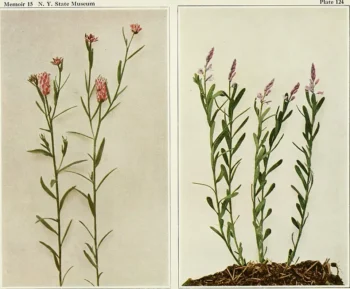
Racemed Milkwort: A Hidden Gem for Native Plant Enthusiasts
If you’re looking to add a charming, low-maintenance native to your garden that most of your neighbors have never heard of, let me introduce you to racemed milkwort (Polygala polygama). This delightful little biennial might not win any flashy flower contests, but it’s got character, resilience, and a whole lot of ecological value packed into its modest frame.
What Exactly Is Racemed Milkwort?
Racemed milkwort is a native North American biennial forb – basically a non-woody herbaceous plant that lives for two years. Don’t let the name fool you; it’s not related to actual milkwort and doesn’t produce milk. The racemed part refers to its flower arrangement, where small blooms cluster along a central stem like tiny beads on a string.
This unassuming plant typically grows as a low, spreading ground cover with small oval leaves and delicate white to pink flowers that appear in dense clusters from spring through fall. It’s the kind of plant that rewards close observation – you might miss its subtle beauty from across the garden, but get up close and you’ll discover intricate little flowers that are absolutely charming.
Where Does It Call Home?
Racemed milkwort has an impressive native range, stretching from southeastern Canada all the way south to Florida and west to Minnesota and Texas. You’ll find it naturally growing in states from Maine to Louisiana, making it at home in USDA hardiness zones 3 through 9. It’s particularly fond of sandy, well-drained soils and can handle everything from full sun to partial shade conditions.
- Species observed
- No observations
A Word About Rarity
Before you rush out to plant this beauty everywhere, there’s something important to know: racemed milkwort has rare status in some areas, particularly in New Jersey where it’s listed as S2 (imperiled). This means that while it’s a fantastic choice for native gardens, you should only source it from reputable nurseries that grow it responsibly rather than wild-collecting it. Think of it as adopting a rescue plant – you’re giving it a safe home while helping preserve wild populations.
Why Your Garden (and Local Wildlife) Will Love It
Here’s where racemed milkwort really shines as a garden citizen:
- Pollinator magnet: Those small flowers are perfect landing pads for native bees, butterflies, and other tiny pollinators who often get overlooked by gardeners focused on larger blooms
- Low maintenance: Once established, this little trooper is remarkably drought tolerant and pretty much takes care of itself
- Extended bloom time: Flowers from spring through fall means months of subtle color and pollinator support
- Self-seeding: It readily produces seeds for natural expansion (but won’t become aggressive about it)
- Versatile placement: Works beautifully in rock gardens, native plant gardens, prairie restorations, or naturalized areas
Growing Racemed Milkwort Successfully
The beauty of this native is its simplicity. Racemed milkwort isn’t fussy about much, but here are the key points for success:
Soil: Well-drained soil is essential – it particularly loves sandy conditions but adapts to various soil types as long as water doesn’t sit around the roots.
Light: Full sun to partial shade works well, though you’ll get the best flowering in sunnier spots.
Water: Once established, it’s quite drought tolerant. In fact, overwatering is more likely to cause problems than underwatering.
Planting: Fall direct seeding works well, mimicking natural conditions. The seeds need a cold period to germinate properly the following spring.
Perfect Garden Companions
Racemed milkwort plays well with other natives that appreciate similar conditions. Try pairing it with wild bergamot, little bluestem grass, purple coneflower, or wild columbine. In rock gardens, it looks lovely alongside native sedums or wild ginger.
The Bottom Line
Racemed milkwort might not be the showiest plant in your garden, but it’s exactly the kind of steady, reliable native that forms the backbone of a healthy ecosystem. It’s perfect for gardeners who appreciate subtle beauty, want to support local wildlife, and prefer plants that don’t demand constant attention. Plus, there’s something satisfying about growing a plant that most people have never heard of – you’ll have plenty of interesting conversations when fellow gardeners ask about that charming little bloomer in your native garden.
Just remember to source it responsibly, and you’ll be rewarded with years of quiet beauty and the satisfaction of knowing you’re supporting both pollinators and plant conservation.