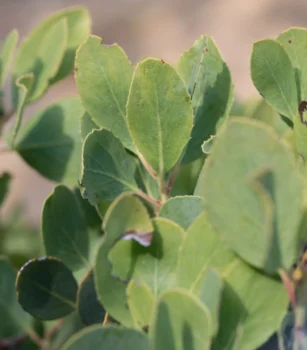
Rainbow Manzanita: A Rare Gem for Dedicated Native Plant Enthusiasts
Meet the Rainbow manzanita (Arctostaphylos rainbowensis), one of California’s most exclusive native shrubs. This isn’t your typical garden center find – it’s a botanical treasure that exists in just a tiny pocket of Southern California, making it both incredibly special and remarkably challenging to grow.
What Makes Rainbow Manzanita So Special?
Rainbow manzanita is a compact evergreen shrub that typically stays under 13-16 feet tall, though most specimens remain much smaller. Like other manzanitas, it boasts beautiful oval-shaped leaves and produces clusters of delicate, urn-shaped flowers that range from pink to white during winter and early spring. These blooms eventually give way to attractive red berries that add another season of interest.
But here’s what makes this plant truly extraordinary: it’s found naturally in only one tiny area of Riverside County, California, near the Rainbow area close to Fallbrook. We’re talking about a plant so rare that only 6 to 20 populations exist in the wild, with an estimated 1,000 to 3,000 individual plants total.
Native Range and Conservation Status
This native California shrub has a Global Conservation Status of S2, meaning it’s considered Imperiled due to its extreme rarity. Rainbow manzanita grows exclusively in California, specifically in a very limited area of Riverside County.
- Species observed
- No observations
Important Conservation Note: Due to its imperiled status, we strongly recommend only planting Rainbow manzanita if you can source it from reputable native plant nurseries that propagate it responsibly. Never collect from wild populations, as this could further threaten this rare species.
Why Grow Rainbow Manzanita?
If you’re a dedicated native plant enthusiast looking for something truly unique, Rainbow manzanita offers several compelling reasons to consider it:
- Conservation value: Growing this rare plant helps preserve genetic diversity
- Pollinator support: The flowers attract native bees and other local pollinators
- Year-round interest: Evergreen foliage, winter blooms, and colorful berries
- Water-wise gardening: Drought-tolerant once established
- Conversation starter: A genuine botanical rarity in your garden
The Reality Check: This Isn’t for Everyone
Let’s be honest – Rainbow manzanita is not a beginner’s plant. It’s notoriously difficult to cultivate and requires specific conditions that mimic its native habitat. Most gardeners will find better success with more common manzanita species that offer similar beauty with much less fuss.
This plant is best suited for specialized native California gardens, botanical collections, or conservation-focused landscapes where the grower has experience with challenging native species.
Growing Conditions and Care
If you’re determined to grow this rare beauty, here’s what it needs:
Climate: USDA zones 9-10, specifically adapted to Southern California’s Mediterranean climate
Soil: Well-draining soil is absolutely critical – this plant cannot tolerate wet feet
Sun exposure: Full sun to partial shade
Water: Drought-tolerant once established, but the key word is once established – getting there is the challenge
Planting and Care Tips
- Plant in fall to give roots time to establish before hot weather
- Ensure excellent drainage – consider raised beds or slopes
- Water sparingly and only during establishment period
- Avoid fertilizers, which can harm native plants adapted to poor soils
- Mulch lightly with gravel or decomposed granite rather than organic mulch
- Be patient – establishment can take 2-3 years
The Bottom Line
Rainbow manzanita is a plant for the truly dedicated native gardener who understands both the challenges and the conservation value of growing rare species. While it offers unique beauty and supports local ecosystems, its extreme rarity and difficult growing requirements make it unsuitable for most gardens.
If you’re drawn to the manzanita family but want something more manageable, consider other California native manzanitas like Arctostaphylos densiflora or Arctostaphylos ‘Emerald Carpet,’ which offer similar aesthetic appeal with much better survival rates in cultivation.
For those who do choose to grow Rainbow manzanita, remember that you’re not just growing a plant – you’re participating in conservation efforts to preserve one of California’s rarest native species.