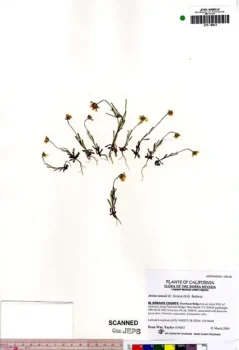
Ramm’s Madia: A Rare California Native Worth Knowing
If you’re passionate about California native plants, you might have stumbled across the name Ramm’s madia (Jensia rammii) in your botanical adventures. This little-known annual forb represents one of those special native plants that quietly exists in California’s diverse landscapes, though you’re unlikely to find it at your local nursery.
What Exactly is Ramm’s Madia?
Ramm’s madia is an annual forb, which simply means it’s a soft-stemmed plant that completes its entire life cycle in one growing season. Unlike woody shrubs or trees, this plant lacks significant woody tissue and produces fresh growth from the ground each year. You might also see it listed under its former scientific name, Madia rammii, as botanical classifications occasionally get updated as scientists learn more about plant relationships.
Where Does It Call Home?
This native plant species is endemic to California, meaning it naturally occurs nowhere else in the world. Its limited distribution makes it part of California’s unique botanical heritage that has evolved specifically within the state’s diverse climatic and soil conditions.
- Species observed
- No observations
A Word About Rarity
Here’s where things get interesting – and important. Ramm’s madia carries a conservation status of S3?, which indicates some level of concern about its population stability, though the question mark suggests uncertainty about its exact status. This rarity designation means we should approach this plant with extra care and respect.
What this means for gardeners: If you’re interested in growing Ramm’s madia, it’s crucial to source seeds or plants only from reputable native plant nurseries that practice ethical collection methods. Never collect seeds from wild populations, as this could impact already vulnerable plant communities.
Should You Plant Ramm’s Madia?
The honest answer is: probably not, unless you’re a serious native plant conservationist with access to responsibly sourced material. Here’s why:
- Its rarity means plant material is extremely difficult to find
- Limited research exists on its cultivation requirements
- As an annual, it requires replanting each year
- Its conservation status suggests wild populations may be stressed
Better Alternatives for Your Native Garden
If you’re drawn to California native annuals, consider these more readily available and well-documented alternatives:
- Common madia (Madia elegans) – a related species that’s easier to grow
- California poppies (Eschscholzia californica) – the state flower and a reliable annual
- Clarkia species – beautiful native annuals with showy flowers
- Lupines (Lupinus species) – diverse group of native annuals and perennials
Supporting Conservation Efforts
Rather than trying to grow this rare plant, consider supporting its conservation in other ways:
- Donate to organizations that protect California native plant habitats
- Participate in citizen science projects that monitor rare plant populations
- Choose common California natives for your garden to support overall ecosystem health
- Educate others about the importance of rare plant conservation
The Bigger Picture
Plants like Ramm’s madia remind us that California’s native flora includes not just the showy, garden-friendly species we commonly see, but also quiet, specialized plants that play important roles in their ecosystems. While we may not be able to welcome every rare native into our gardens, we can appreciate their existence and work to protect the habitats where they naturally thrive.
Sometimes the best way to honor a rare native plant is to admire it from a distance while supporting the broader native plant community through thoughtful gardening choices with more common species.