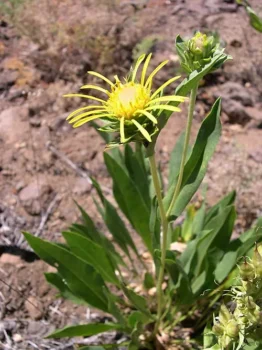
Ray Goldenweed: A Golden Treasure for Your Native Garden
Meet ray goldenweed (Pyrrocoma radiata), a charming native wildflower that’s like finding a pot of gold at the end of your garden rainbow! This delightful perennial brings sunshine to late-season landscapes when many other flowers are calling it quits for the year.
What Makes Ray Goldenweed Special?
Ray goldenweed is a true native gem, naturally occurring in Idaho and Oregon. As a perennial forb (that’s botanist-speak for a non-woody flowering plant), it comes back year after year to brighten your garden with its cheerful yellow, daisy-like blooms.
- Species observed
- No observations
This plant goes by the scientific name Pyrrocoma radiata, though you might also see it listed under its synonyms Haplopappus carthamoides var. maximus or Haplopappus radiatus in older gardening references.
A Word About Conservation
Here’s something important to know: ray goldenweed has a Global Conservation Status of S3, meaning it’s considered vulnerable in the wild. With typically only 21 to 100 occurrences and between 3,000 to 10,000 individuals remaining, this plant needs our help! If you’re interested in growing ray goldenweed, please make sure to source your plants or seeds from reputable native plant nurseries that practice responsible collection methods.
Why Your Garden (and Local Wildlife) Will Love It
Ray goldenweed is a pollinator magnet! Its bright yellow flowers bloom in late summer and fall, providing crucial nectar when many other flowers have finished their show. Native bees, butterflies, and other beneficial insects absolutely adore this plant, making it a wonderful addition to any wildlife-friendly garden.
The plant’s sunny disposition and drought tolerance make it perfect for:
- Native plant gardens
- Wildflower meadows
- Xeriscaping projects
- Low-maintenance landscapes
- Pollinator gardens
Growing Ray Goldenweed Successfully
Good news for busy gardeners – ray goldenweed is refreshingly low-maintenance once established! This hardy perennial thrives in USDA hardiness zones 4-8, making it suitable for a wide range of climates.
Ideal Growing Conditions
Ray goldenweed appreciates:
- Sunlight: Full sun for the best flowering
- Soil: Well-drained soils (it’s not picky about soil type)
- Water: Drought-tolerant once established, but appreciates occasional watering during extremely dry spells
- Space: Give it room to spread and naturalize
Planting and Care Tips
Spring is the best time to plant ray goldenweed. Here’s how to give your plants the best start:
- Plant in well-draining soil – soggy roots are this plant’s enemy
- Water regularly during the first growing season to help establish strong roots
- Once established, reduce watering significantly – this plant actually prefers to be on the dry side
- Deadhead spent flowers to encourage additional blooms
- Allow some flowers to go to seed if you want the plant to self-sow
- Cut back in late fall or early spring
The Bottom Line
Ray goldenweed is a fantastic choice for gardeners who want to support native wildlife while adding late-season color to their landscapes. Its drought tolerance and low-maintenance nature make it perfect for busy gardeners, while its conservation status gives you the opportunity to help preserve a vulnerable native species.
Just remember to source your plants responsibly, and you’ll be rewarded with years of golden blooms and happy pollinators. Your garden – and the local ecosystem – will thank you!