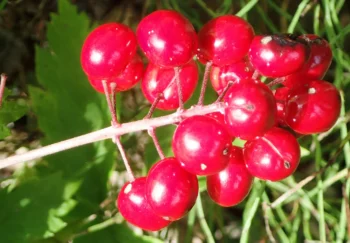
Red Baneberry: A Rare Native Beauty for Your Shade Garden
If you’re looking to add some woodland magic to your shade garden, red baneberry (Actaea rubra rubra) might just be the perfect native perennial you’ve been searching for. This charming North American native brings both delicate spring flowers and eye-catching berries to shaded spaces, though its rarity means you’ll want to source it responsibly.
What Makes Red Baneberry Special?
Red baneberry is a perennial forb – basically a non-woody plant that comes back year after year. It’s also known by its scientific synonyms Actaea rubra var. rubra and Actaea spicata ssp. rubra, but most gardeners simply call it red baneberry. This native beauty puts on quite a show with its white, fluffy flower clusters in late spring, followed by clusters of bright red berries that give the plant its common name.
Where Does Red Baneberry Call Home?
This woodland wonder is native to an impressive range across North America, including Alaska, Canada, and much of the northern United States. You’ll find it naturally growing from Alberta and British Columbia in the west, all the way to the Maritime provinces in the east. In the lower 48 states, it thrives from Montana and North Dakota down to Pennsylvania and New Jersey, with populations scattered across the Great Lakes region and New England.
- Species observed
- No observations
A Word of Caution: Rarity Matters
Here’s something important to know before you start planning: red baneberry is considered rare in some areas. In New Jersey, for example, it has a rarity status of S2, meaning it’s imperiled in the state. If you’re interested in growing this beauty, make sure you source your plants from reputable native plant nurseries that propagate their own stock rather than collecting from wild populations.
Creating the Perfect Growing Conditions
Red baneberry is happiest in conditions that mimic its natural woodland habitat. Here’s what it needs to thrive:
- Partial to full shade – think dappled sunlight under trees
- Moist, well-draining soil rich in organic matter
- Cool, humid conditions
- USDA hardiness zones 3-7
- Consistent moisture without waterlogged conditions
Why Your Garden (and Local Wildlife) Will Love It
Beyond its obvious beauty, red baneberry serves as a valuable native plant for ecological gardening. The small white flowers attract various pollinators, including flies, small bees, and beetles. While the berries are toxic to humans (hence the bane in baneberry), they provide food for some bird species that can safely process the compounds.
Perfect Spots for Red Baneberry
This versatile native works beautifully in several garden settings:
- Woodland gardens as an understory specimen
- Shade borders alongside other native perennials
- Naturalized areas where it can spread gradually
- Native plant gardens focused on regional flora
Planting and Care Made Simple
Once you’ve sourced your red baneberry responsibly, planting and care are refreshingly straightforward:
- Plant in spring or fall when temperatures are moderate
- Dig a hole as deep as the root ball and twice as wide
- Amend heavy clay soils with compost for better drainage
- Apply a 2-3 inch layer of organic mulch to keep roots cool and retain moisture
- Water regularly during the first growing season to establish roots
- Once established, minimal maintenance is needed
The Bottom Line
Red baneberry offers gardeners a chance to grow a truly special native plant that supports local ecosystems while adding unique beauty to shaded spaces. Just remember to source it responsibly due to its rarity in some regions, and you’ll be rewarded with years of woodland charm. The combination of delicate spring blooms and striking red berries makes this perennial a standout choice for anyone looking to create a garden that’s both beautiful and ecologically meaningful.